SpaceX Starship Lunar Landing: Humanity's South Pole Touchdown Under a Waning Crescent Moon
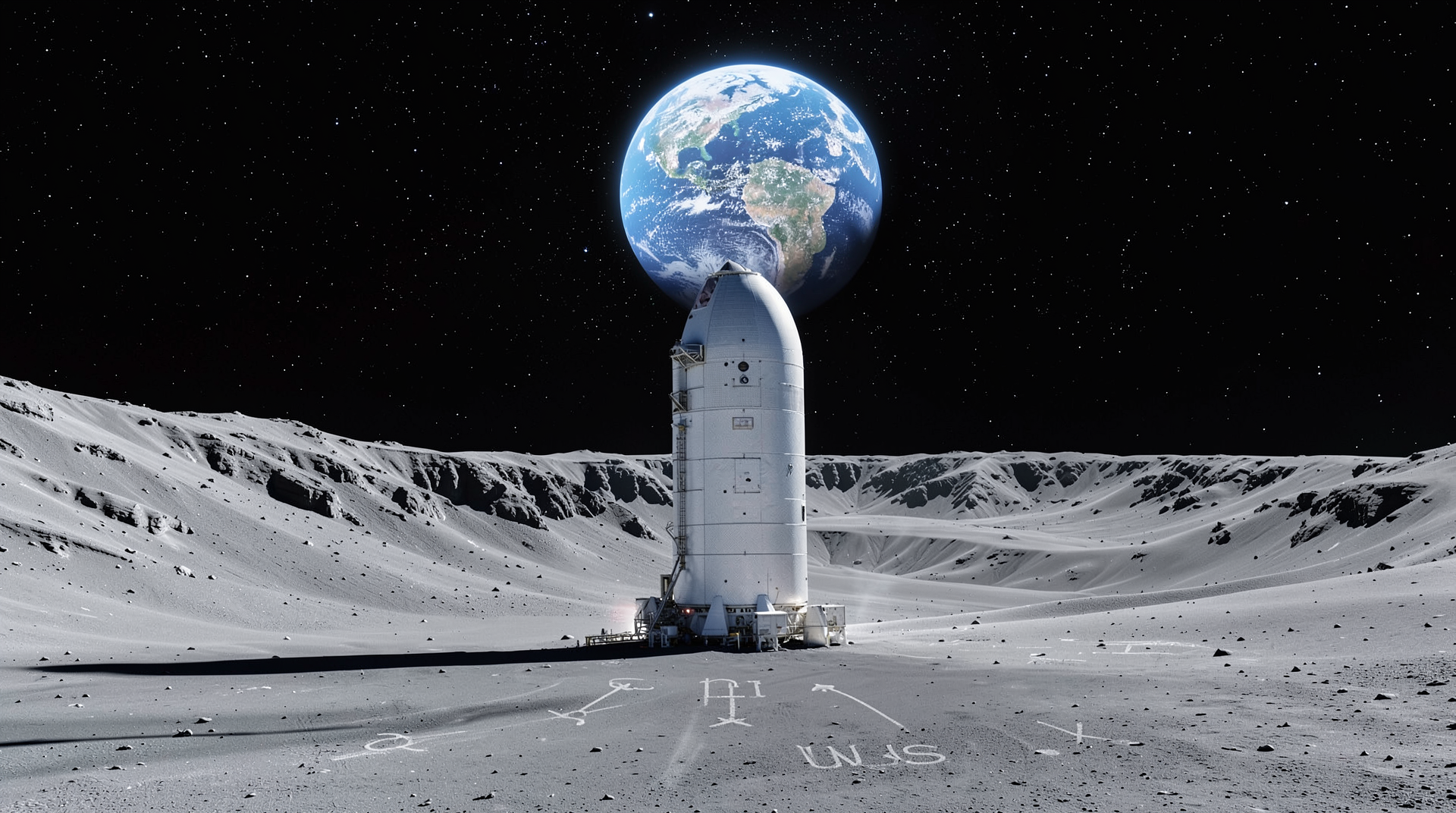
The silver giant touched the ancient dust at 2:30 PM Eastern Time. An uncrewed SpaceX Starship — the vehicle destined to carry astronauts back to the Moon under NASA's Artemis III program — successfully executed a soft landing at the lunar South Pole on July 12, 2026. And the sky it landed beneath was anything but ordinary.
As the stainless-steel behemoth descended through the vacuum toward the shadowed craters of the Moon's southern highlands, a Waning Crescent Moon hung in Earth's own skies — the last sliver of light before the Cancer New Moon on July 14. The cosmos, it seems, chose its moment carefully.
This was the dress rehearsal for humanity's return. If all continues on track, Artemis III will place boots on lunar regolith by late 2027 — the first human footprints on the Moon since Gene Cernan's in December 1972. But before astronauts fly, the machines must prove themselves. And on this July afternoon, beneath a sky crackling with astrological tension, a Starship named for the heavens earned its name.
The Landing: What Happened
The uncrewed Starship — designated HLS (Human Landing System) Test Article 1 — ignited its Raptor engines for the final descent burn at approximately 2:18 PM EDT. After a multi-month journey that included refueling in low-Earth orbit via SpaceX's orbital tanker fleet, the vehicle had entered a near-rectilinear halo orbit around the Moon before committing to landing.
The target: a relatively flat expanse near Shackleton Crater's rim at the lunar South Pole — a region of eternal shadow and light, where water ice lies frozen in craters that have never seen the Sun.
Telemetry confirmed touchdown at 2:30 PM EDT. The landing legs held. The engines cut. And in mission control rooms from Hawthorne, California to Houston, Texas, the tension of years dissolved into applause.
"Today we proved that the architecture works," a NASA spokesperson said in the post-landing briefing. "The path to Artemis III just got dramatically shorter."
The Astrology of a Lunar Landing
Every historic moment has a birth chart. And the chart for this landing — set for 2:30 PM EDT at Cape Canaveral, the symbolic home of American spaceflight — tells a story of ambition, risk, and transformation that runs as deep as the craters Starship now sits beside.
Mercury Retrograde in Cancer: The Cosmic Wild Card
Let's address the elephant in the room immediately: Mercury was retrograde at 20° Cancer when Starship touched down.
Conventional astrological wisdom says Mercury retrograde is the worst possible time for anything involving technology, travel, or complex machinery. And here we had all three — a spacecraft, billions of miles of accumulated travel, and the most sophisticated landing system ever built for lunar operations.
But Mercury retrograde in Cancer isn't simply a "don't do it" transit. It's a review, a reconsideration, a return. Cancer is the sign of home, roots, and the past. A Mercury retrograde in this sign asks us to revisit where we came from — and in this case, it invited humanity to return to the Moon after a 54-year absence.
The retrograde also ruled the 9th house (long-distance travel, exploration) and 10th house (public achievement) in the landing chart. Its retrograde condition suggested a test of systems, a rehearsal rather than a finale — and that's exactly what this uncrewed landing was.
⚠️ Mercury Retrograde Caution: While the landing was successful, Mercury's retrograde position through July 2026 means the data review, communications, and post-landing analysis phase may encounter delays, miscommunications, or technical glitches requiring re-examination. SpaceX and NASA teams should double-check all telemetry, avoid rushing conclusions, and prepare for possible software patches. The retrograde lasts until late July — expect refinements rather than clean, linear progress.
Mars Conjunct Uranus in Gemini (8th House): The Electric Descent
The most dramatic feature of the landing chart is the ongoing Mars-Uranus conjunction in Gemini, parked squarely in the 8th house — the house of death and rebirth, transformation, and shared resources.
Mars and Uranus in Gemini are the quintessential "breakthrough or breakdown" combination. This is the signature of experimental technology pushed to its absolute limit. Gemini rules communication, navigation, and data transmission — and the 8th house adds the stakes of life, death, and borrowed money. The Artemis program represents a staggering financial investment. The 8th house placement says: this is where things either transform or fail catastrophically.
The fact that the landing succeeded under this transit makes it all the more remarkable. Mars provides the thrust, the fire, the will to descend. Uranus provides the innovation — the unprecedented landing maneuver, the novel heat shield technology, the autonomous guidance systems. Together in Gemini, they delivered a landing defined by split-second data processing and real-time course corrections.
⚡ Mars-Uranus Warning: This conjunction remains active through mid-July 2026. While the landing succeeded, the energy of Mars-Uranus in the 8th house doesn't simply dissipate. Sudden revelations, unexpected findings in the data, or even hardware anomalies discovered during post-landing inspection are possible. The coming days are not a time for celebrating the end of risk — they are a time for vigilant monitoring. The electric nature of this transit means surprises, both welcome and unwelcome, are very much on the table.
Saturn at 14° Aries: The Pre-Retrograde Pause
Saturn sat at 14° Aries in the landing chart — and it was nearly motionless. The ringed planet is about to station retrograde on July 18, and in the days leading up to a station, Saturn's energy intensifies dramatically.
In Aries, Saturn represents disciplined ambition, controlled fire, and the weight of responsibility on bold endeavors. At 14° — a degree associated with testing and consolidation — Saturn was asking a simple but profound question: Have you built this well enough?
The landing's success suggests that, at least for this test, the answer was yes. But Saturn in Aries in the chart's 6th house (work, service, detailed labor) points to the immense engineering effort behind the scenes — the thousands of hours, the painstaking analysis, the willingness to confront hard truths about what works and what doesn't.
🪐 Saturn Station Warning: Saturn stations retrograde on July 18, 2026. The week leading up to this station (July 12–18) is a high-stakes period. Saturn in Aries doesn't reward shortcuts. Any corner that was cut, any test that was deferred, any risk that was accepted without full understanding — Saturn will expose it. The landing leg stress data, the engine performance telemetry, the thermal protection integrity: all of it faces Saturn's unblinking audit in the days ahead. Celebrate the landing, but don't look away from the engineering review.
The Waning Crescent Moon in Gemini: Threshold Energy
The Moon at 27° Gemini — a Waning Crescent, just two days before the New Moon — added a deeply liminal quality to this event. The Waning Crescent is the final phase of the lunar cycle, the darkest moment before rebirth. It's associated with endings, release, and preparation for what comes next.
In Gemini and the 8th house, this lunar placement underscores the dual nature of spaceflight: triumph and risk, arrival and isolation, success today and the long road still ahead. The lunar phase reminds us that this landing, while historic, was a test — a necessary step in a larger cycle. The real rebirth comes with the New Moon on July 14, and symbolically, with the crewed Artemis III landing still to come.
Why the Lunar South Pole Matters
The South Pole isn't just a scenic destination. It's the most strategically important location in the solar system beyond Earth.
Water ice. The permanently shadowed craters near the South Pole contain vast reserves of frozen water — a resource that can be split into hydrogen and oxygen for rocket fuel, purified for drinking, and used for radiation shielding. Landing at the South Pole is the first step toward establishing a permanent human presence on the Moon.
The astrological resonance is uncanny. The South Pole of the Moon aligns symbolically with the South Node — the point of past karma, ancestral inheritance, and what we bring with us from where we've been. The North Node sits at 0° Pisces in the landing chart, pointing toward a future of unity, imagination, and spiritual expansion. The South Node at 0° Virgo — the sign of engineering, precision, and service — represents the technical mastery we're bringing from our past into this new frontier.
Landing at the lunar South Pole under this nodal axis suggests that humanity is quite literally touching the past (the Moon's ancient, shadowed craters) while reaching toward an almost mystical future (permanent off-world settlement).
The Larger Context: Artemis III and Beyond
This uncrewed landing was the critical path item for Artemis III. Without a proven landing system, there can be no human return. Now, with this test complete, the timeline sharpens:
- Data Analysis (July–September 2026): Engineers pore over every byte of landing telemetry
- Starship HLS Refinements (Late 2026): Adjustments based on test data
- Orbital Refueling Demo (Early 2027): Proving the tanker architecture at scale
- Artemis III Crewed Landing (Late 2027): Astronauts return to the lunar surface
But timelines in spaceflight are aspirational at best. Delays are the rule, not the exception — and the astrology of the moment confirms this.
Limitations, Risks, and the Road Ahead
For all the triumph of this landing, significant challenges remain — and the astrology of July 2026 offers sobering perspective alongside celebration.
The Starship Architecture's Unresolved Questions
One successful landing doesn't validate the entire architecture. The orbital refueling process — which requires multiple tanker launches and autonomous docking in Earth orbit — remains untested at the scale required for Artemis III. Each refueling is a complex ballet of cryogenic fluid transfer in microgravity, and the failure of any single launch could delay the entire campaign.
The Mercury Retrograde Data Review
With Mercury retrograde through the post-landing analysis phase, there is a genuine risk of misinterpreting data, overlooking anomalies, or struggling with communications between the many teams involved. The retrograde doesn't doom the project — but it demands patience, thoroughness, and a willingness to revisit conclusions that initially seem solid.
Saturn's Approaching Station
Saturn's pre-retrograde station (July 12–18, 2026) is a period of heightened scrutiny. If the landing gear experienced unexpected stress, if thermal readings exceeded margins, if any system performed at the edge of its envelope — Saturn will bring these truths to light. The engineering teams should welcome this: better to find problems now, during an uncrewed test, than during Artemis III.
The Political Dimension
Artemis III exists within a political ecosystem. Budgets, international partnerships (including the Artemis Accords signatories), and shifting national priorities could all affect the timeline. The 9th house stellium in the landing chart (Sun, Mercury, Jupiter in Cancer) speaks to the international and philosophical dimensions of this mission. Cancer's influence suggests that emotional resonance — the public's connection to the Moon, the symbolic power of human return — may ultimately matter as much as technical readiness.
Geopolitical Competition
The lunar South Pole is a contested destination. China and Russia have announced their own crewed lunar ambitions for the early 2030s, and the selection of landing sites near water ice deposits carries strategic implications. The Scorpio Ascendant in the landing chart hints at the intensity and unspoken rivalries that lie beneath the surface of international space cooperation.
A Responsible Word on Astrology and Spaceflight
It's important to state clearly: astrology is a lens for understanding, not a predictive science. The success of the Starship landing was determined by physics, engineering, and the skill of the people who designed, built, and operated the vehicle — not by the positions of planets. Astrology offers us a symbolic language to contemplate the meaning and context of historic events, not a causal explanation for their outcomes.
Plan your life — and your space missions — accordingly.
What This Moment Means
On December 14, 1972, Apollo 17 astronaut Gene Cernan climbed the ladder of the Lunar Module Challenger and became the last human being to stand on the Moon. As he prepared to leave, he spoke words that have echoed through the decades:
"We leave as we came, and, God willing, as we shall return, with peace and hope for all mankind."
Fifty-four years later, on July 12, 2026, a silver spacecraft descended from the black sky and touched the grey dust of the South Pole. It carried no astronauts — only sensors, cameras, and the weight of human ambition. But in its successful landing, it answered Cernan's prayer.
The return has begun.
Under a Waning Crescent Moon, with Mercury moving backward and Saturn standing still, humanity reached out and touched its past — and, just maybe, its future.
The road to Artemis III runs through Shackleton Crater. And as of 2:30 PM today, that road is open.
Astrological chart calculated for July 12, 2026, 2:30 PM EDT, Cape Canaveral, Florida (28°24'N, 80°36'W). Chart type: Tropical, Placidus houses. All planetary positions are apparent geocentric. Astrology is offered here as a reflective and interpretive framework, not as a predictive or deterministic science. Spaceflight decisions should be based on engineering data, rigorous testing, and expert analysis — not astrological transits.
Related Articles
First Quarter Moon in Capricorn (Oct 18): The Week's "Commit or Release" Moment
October 14, 2026
The First Quarter Moon in Capricorn (Oct 18, 2026, 16:10 UTC) squares the Libra Sun — a cosmic checkpoint asking you to commit or release. Plus Venus retrograde cautions, Pluto's station, and a do/don't guide for the week.
Venus Retrograde in Scorpio Squares Pluto All Week: The Love-and-Power Test Peaking Around Oct 20
October 13, 2026
Retrograde Venus in Scorpio squares Pluto all week, exact around Oct 19–20 as Pluto stations direct. How to survive the love-and-power test — what to avoid, who feels it, and how to pass it.
Scorpio to Capricorn by Way of Sagittarius: Your Day-by-Day Lunar Weather for Oct 12–18
October 12, 2026
The Moon travels from Scorpio through Sagittarius into Capricorn Oct 12–18, 2026. Your day-by-day lunar weather, key aspects, and caution zones — including the First Quarter Moon on Oct 18 and Pluto's direct station.
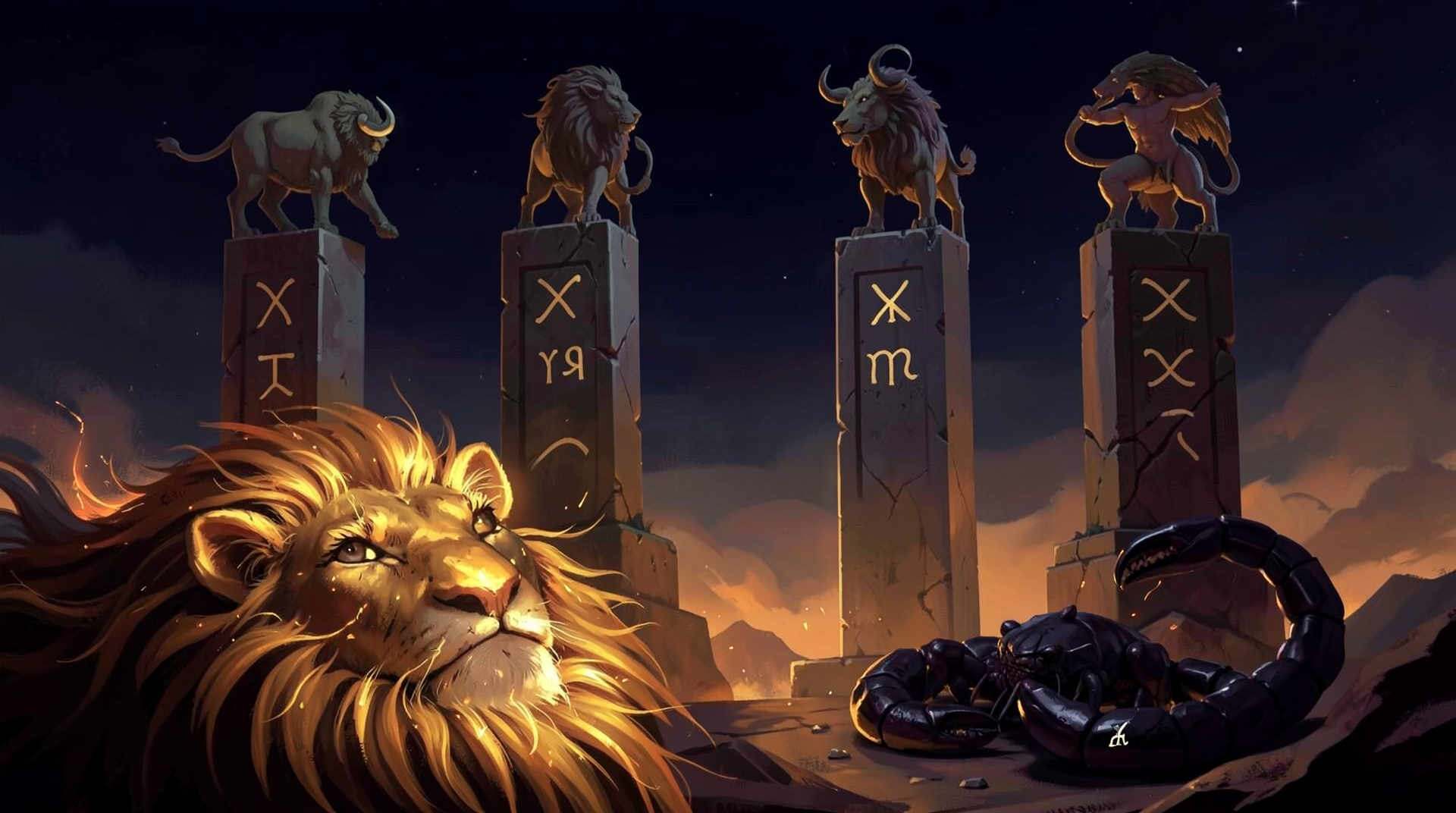
The Fixed-Sign Fortress: Leo Mars–Jupiter, Scorpio Venus–Mercury and Why This Week Has No Quick Fixes
October 8, 2026
Why the fixed-sign fortress of Leo Mars–Jupiter and Scorpio Venus–Mercury makes October 8–11, 2026 a week with no quick fixes — and how to work with the sky instead of against it.