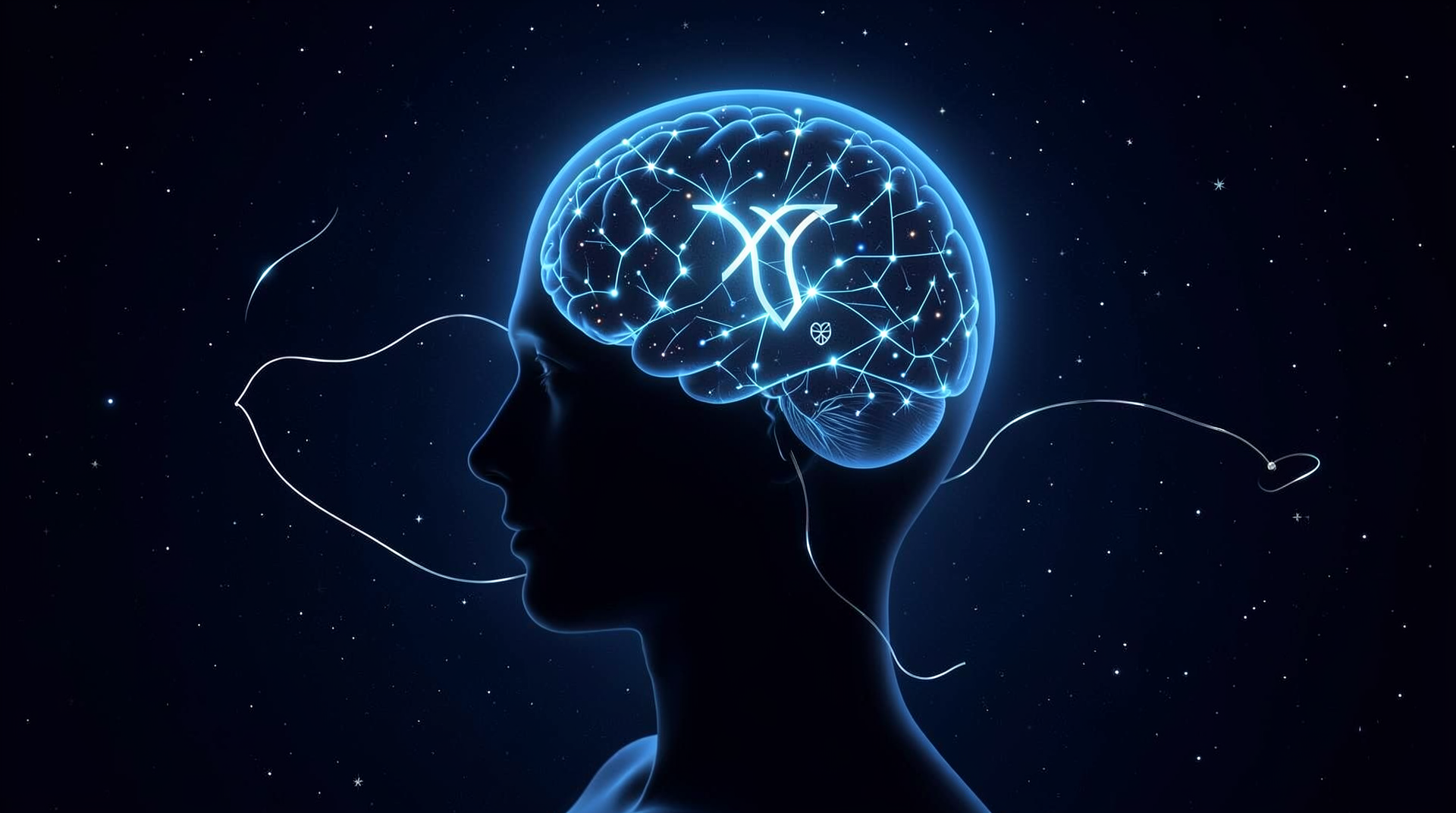
The Gemini Spark: Synapse-X, the Mars-Uranus Conjunction, and the Astrology of the First Human-AI Neural Interface Trial
Zurich, Switzerland — July 3, 2026 — In a windowless clinical suite somewhere in Zurich's medical research corridor, a human being became the first person on Earth to receive a memory-enhancing neural interface implant from Synapse-X, the Swiss-American biotech firm that has positioned itself as the most serious competitor to Elon Musk's Neuralink. The procedure, announced only after the patient was reported stable, marks the beginning of the CogniBridge-1 trial — a Phase I clinical study designed to test whether a bidirectional brain-computer interface (BCI) can augment human memory formation and recall in patients with early-stage cognitive decline.
The news landed on a day thick with astrological electricity. At the moment of the announcement — midday in Zurich — Mars and Uranus sat less than one degree apart in Gemini, the sign that governs neural networks, communication, and the lightning-fast synapses of the human mind. Mercury, Gemini's ruling planet, was retrograde in Cancer. Jupiter had just crossed the threshold from Cancer into Leo at the anaretic degree. And Pluto, retrograde in Aquarius, formed a tense square to the Mars-Uranus conjunction from the 5th house of creation and risk.
In other words: the cosmos was staging a full-throated conversation about what happens when humanity rewires its own brain — and the conversation came with a warning label.
What Synapse-X Actually Announced
Synapse-X, founded in 2022 by neuroscientist Dr. Leona Voss and chip-design veteran Marcus Chen, has spent four years in relative stealth. Unlike Neuralink, which has courted controversy through high-profile animal testing and Musk's characteristic showmanship, Synapse-X pursued what it calls a "quiet regulatory pathway" — working through Swissmedic, Switzerland's therapeutic products regulator, which approved the Phase I trial in late May 2026.
The CogniBridge implant is a thin-film electrode array — roughly the diameter of a lentil — surgically placed in the hippocampus, the brain's memory consolidation center. It reads neural firing patterns associated with memory encoding and, in theory, can deliver micro-stimulation to reinforce weak or degraded signals. The first patient, identified only as "Subject C1," is a 67-year-old with mild cognitive impairment (MCI), a condition that often precedes Alzheimer's disease.
The trial will enroll up to 12 patients over the next 18 months. Primary endpoints are safety and device tolerability; memory enhancement is a secondary measure.
Why Switzerland? The country's regulatory framework for advanced medical devices is among the most flexible in Europe, and its neuroscience research ecosystem — anchored by ETH Zurich and the University of Zurich — is world-class. Synapse-X also benefits from Switzerland's speciality in medical privacy law, which allowed the company to conduct the procedure with minimal pre-announcement fanfare.
The Astrology: Mars Conjunct Uranus in Gemini — The Electric Mind
To understand why the timing of this trial carries such symbolic weight, you have to understand what Mars conjunct Uranus in Gemini actually means.
Mars is the planet of action, initiative, cutting, surgery, and — when poorly placed — accident and impulsivity. Uranus is the planet of sudden breakthroughs, radical innovation, electricity, neurology, and the overturning of established orders. Gemini rules the nervous system, communication, short-range connections, and the twin hemispheres of the brain itself.
When these two planets meet in Gemini — an exact conjunction at roughly 3° to 4° — the archetype is unmistakable: a surgical strike into the nervous system. A technological leap that rewires how humans think, speak, and remember. The lightning bolt hitting the neural tree.
This is not a subtle transit. Mars-Uranus conjunctions are rare (the last in Gemini was in 1942, during the early experiments that would lead to the first computers). They produce events that feel sudden, irreversible, and charged with both brilliance and danger. Think of the first nuclear chain reaction, the first heart transplant, or the moment the internet went public.
In the trial's birth chart — cast for noon on July 3 in Zurich — the Mars-Uranus conjunction falls in the 9th house of higher knowledge, publishing, and long-range vision. This is the house of the university, the research paper, the paradigm-shifting discovery. It could hardly be more fitting: a procedure designed to expand the mind, launched under a transit that is the expansion of the mind — but one that arrives without a seatbelt.
Astrological Warning: Mars-Uranus conjunctions are thrilling but notoriously volatile. They correlate with accidents, surgical complications, and outcomes that outpace the ability to manage them. The conjunction sits in the 9th house — the domain of "big ideas" — but squares Pluto in the 5th house of creative risk. This is a configuration that says: the breakthrough is real, but so is the shadow.
Mercury Retrograde in Cancer: The Messenger Walking Backward
If Mars-Uranus in Gemini supplies the electric charge of the moment, Mercury retrograde in Cancer supplies the caveat.
At the time of the announcement, Mercury — the ruler of Gemini, and therefore the dispositor of the Mars-Uranus conjunction — was retrograde at 25° Cancer in the 10th house of public reputation and authority. In astrological terms, Mercury retrograde is the classic signature of communication breakdowns, technical glitches, data errors, and plans that require revision after the fact. In Cancer, it also carries an emotional charge: memories that resurface, family patterns that demand revisiting, instinct overriding logic.
For a trial that involves implanting a device in the hippocampus — the literal seat of memory — launching under Mercury retrograde is the astrological equivalent of beginning a cross-country road trip with your GPS set to "avoid highways." Everything may work, but you'll take the long way. And you might end up somewhere you didn't intend.
This doesn't mean the trial is doomed. Many successful ventures have launched under Mercury retrograde — but nearly all of them encountered unexpected revisions, delays, or communications crises in the early stages. Synapse-X should expect data anomalies, protocol adjustments, and possibly a public narrative that shifts faster than they can manage.
Practical Caution: Mercury retrograde (which runs through July 26, 2026) is traditionally a period to review, revise, and reconsider, not to initiate brand-new ventures. For patients and families considering enrollment in CogniBridge-1, this transit counsels extra diligence: second opinions, detailed informed consent reviews, and a willingness to wait for the retrograde to clear before making irreversible decisions.
Jupiter at 0° Leo: The Threshold of Hubris
Another striking feature of the chart: Jupiter sits at 0°40' Leo, having just crossed the threshold from Cancer into Leo. Jupiter — the planet of expansion, optimism, and big-picture meaning — is at what astrologers call the anaretic degree (29° Cancer to 0° Leo), the "degree of crisis" where one sign's energy is exhausted and the next has not yet stabilized.
Jupiter in Leo is grandiose, theatrical, courageous, and hungry for recognition. It wants to be seen. It wants to matter. In the 11th house of collective hopes, networks, and futuristic visions, Jupiter in Leo describes exactly what Synapse-X is attempting: a leap toward a future where human cognition is no longer limited by biology, where memory can be engineered, where the self can be upgraded.
But Jupiter at the threshold also has a shadow: overreach. The anaretic degree is inherently unstable. It describes a moment when ambition has outpaced integration. The question Jupiter poses to this trial is not can we do this? but should we? — and the chart suggests the answer hasn't fully arrived yet.
Compounding this: Jupiter forms no major aspects to other planets in the trial chart. It floats in Leo, unaspected, a symbol of grand vision untethered from practical constraint. This is the astrology of a company that genuinely believes it is changing the world — and may not have fully reckoned with what that change entails.
Pluto in Aquarius Square Mars-Uranus: The Ethical Reckoning
The most tense and difficult aspect in the trial chart is the square between Pluto (retrograde at 4° Aquarius, 5th house) and the Mars-Uranus conjunction in Gemini (9th house).
Pluto in Aquarius — a 20-year transit that began in 2024 — represents the transformation of technology, collective power, and what it means to be human in a networked age. In the 5th house, it specifically addresses creative risk, human experimentation, and the ethical boundaries of what we "create."
The square to Mars-Uranus is a red flag. Squares represent friction, crisis, and the need for integration between incompatible forces. Pluto asks: Who controls this technology? Who benefits? What happens to the people whose brains are rewired — and what happens to the people who can't afford to be? Mars-Uranus answers with raw acceleration: We'll figure that out later. The future is now.
This square is the astrological signature of the ethical debate already swirling around neural interfaces. Neuralink has faced allegations of animal welfare violations and premature human experimentation. The broader BCI field operates in a regulatory gray zone where informed consent is complicated by the fact that no one — not the surgeons, not the engineers, not the patients — fully understands the long-term psychological consequences of living with a chip in your hippocampus.
Pluto retrograde adds another layer: the reckoning comes from within. The questions this trial raises won't come from regulators or journalists — they'll come from the technology itself, from unexpected side effects, from the quiet voice of a patient who realizes their memories no longer feel like their own.
Chiron at 0° Taurus in the 8th House: The Wounded Healer Meets the Body
Chiron — the wounded healer, the asteroid that represents the place where we are most hurt and therefore most capable of healing others — sits at the anaretic degree of Taurus (0°43') in the trial's 8th house.
Taurus rules the physical body, the senses, and the material world. The 8th house governs transformation, shared resources, surgery, mortality, and the interface between self and other. Chiron here is exquisitely appropriate: this is a trial that literally cuts into the body (Taurus) in order to transform the mind (8th house). It seeks to heal memory loss — but the procedure itself involves wounding.
Chiron at the anaretic degree suggests that the trial sits on a knife's edge between healing and harm. The technology may work. It may genuinely restore memory function. But at what cost to the patient's relationship with their own body? What happens to the sense of self when memory becomes a hybrid of biology and silicon?
The 8th house placement also raises questions about data, ownership, and the "shared resources" of the mind. If your memories are stored, augmented, and potentially accessed via a neural interface — who owns them? The patient? The company? The cloud server in Zurich where the data is processed?
These are not theoretical questions. They are the Chiron-in-the-8th questions that this trial, whether it succeeds or fails, will force the world to confront.
The Virgo Ascendant and Gemini Midheaven: The Technical Face
The trial's Ascendant is in Virgo (22°) — the sign of analysis, precision, health, and meticulous detail. This is the face the trial presents to the world: clinical, careful, scientifically rigorous. Virgo rising says: We have done the work. We have checked the data. Trust the method.
The Midheaven — the point of public reputation — is in Gemini at 20°, conjunct the Mars-Uranus conjunction in the 9th house. This is the public story: We are revolutionizing the mind. We are building the future of human cognition. Gemini on the MC is witty, communicative, and endlessly curious — but it can also be fickle, scattered, and prone to overpromise.
The tension between the Virgo Ascendant (careful, methodical, humble) and the Gemini MC (flashy, revolutionary, public-facing) mirrors the tension within Synapse-X itself: a company built by scientists who want to do rigorous work, but operating in a market that demands spectacle.
Moon in Aquarius (5th House) — Waning Gibbous: The Collective Mood
The Moon at 19° Aquarius in the 5th house, in a Waning Gibbous phase, describes the emotional atmosphere surrounding this event.
The Waning Gibbous Moon is a phase of dissemination, reflection, and release. It comes after the Full Moon (which occurred on June 29 in Capricorn) and before the Last Quarter. It's a time for sharing what has been learned, for processing the climax that has already occurred, and for beginning the slow turn inward.
An Aquarius Moon is emotionally detached, intellectually curious, and oriented toward the collective good — but it can also be cold, alienated, and disconnected from individual human feeling. In the 5th house of creativity, risk-taking, and human experimentation, this Moon suggests that the public mood is one of cautious fascination. People are intrigued. People are watching. But the emotional temperature is cool — this is not a moment of warm celebration but of clinical observation.
The Aquarius Moon also forms a wide square to Chiron in Taurus and a trine to the Gemini Midheaven, reinforcing the themes of intellectual breakthrough alongside bodily wounding.
The North Node in Pisces (6th House): A Spiritual Compass
Finally, the True North Node sits at 0° Pisces in the 6th house of health, service, and daily work — conjunct the Descendant (7th house cusp). The North Node represents the collective evolutionary direction: where we are being pulled, whether we like it or not.
Pisces is the sign of compassion, dissolution of boundaries, spiritual connection, and — in its shadow form — illusion, escapism, and confusion. A North Node in Pisces asks: Are we developing technology to serve humanity (6th house), or to escape the human condition? Are we healing memory, or are we fleeing from the natural process of forgetting, which is itself a form of mercy?
The conjunction to the Descendant ties this question to relationship — to the other, to the patient, to the vulnerable human being on the operating table. The North Node in Pisces does not reject technology. But it insists that technology serve compassion, not replace it.
Limitations, Risks, and What the Chart Warns Against
Astrology does not predict outcomes with certainty — and it would be irresponsible to suggest otherwise. But a birth chart read honestly reveals the energetic weather into which a venture is born. And the weather around CogniBridge-1 carries significant turbulence:
The Mars-Uranus conjunction is the signature of the breakthrough itself — but it also describes surgical accidents, device malfunction, and outcomes that surprise everyone. Mars in Gemini is in detriment (Gemini is opposite Sagittarius, one of Mars' domiciles), meaning the action is fast, nervous, and potentially unfocused.
Mercury retrograde in Cancer warns of data problems, consent issues, and the emotional weight of memory itself. When the messenger walks backward through the sign of the past, the past has a way of asserting itself. Patients may experience unexpected emotional reactions, resurfacing of old traumas, or confusion about which memories are "theirs."
The Pluto square to Mars-Uranus is the deepest caution: the ethical framework is not yet mature. Power struggles over data, control, and the definition of selfhood are baked into the trial's DNA. Whatever happens in that Zurich clinic, the real story will unfold over years, not days.
Jupiter unaspected at the Leo threshold suggests that the ambition driving this trial may exceed the wisdom available to manage it. This is the astrology of Icarus — not as a guarantee of failure, but as a reminder that flying close to the sun requires humility.
Chiron at the anaretic degree in the 8th house indicates that the healing this technology promises is inseparable from a wound. The body remembers what the mind cannot — and intervening in that relationship is profound, sacred, and perilous.
A Responsible Disclaimer
Astrology offers symbolic insight into the timing and character of events, not definitive prediction. No astrological configuration can tell us whether the CogniBridge-1 trial will succeed or fail. What the chart does offer is a lens through which to ask better questions — about risk, about ethics, about the relationship between technological ambition and human vulnerability.
If you or someone you love is considering participation in a neural interface trial, do not base that decision on astrology alone — or on hope alone. Consult medical professionals, seek independent legal counsel, and give yourself time. Mercury retrograde counsels patience. The stars suggest waiting for clearer skies.
Conclusion: The Gemini Spark and What Comes After
Synapse-X has lit a match in a room full of oxygen. The Mars-Uranus conjunction in Gemini is the spark — brilliant, sudden, irreversible. The trial will generate data, headlines, and almost certainly surprises. By the time Mercury stations direct on July 26 and Mars ingresses into Cancer in late July, the narrative will have shifted — perhaps toward triumph, perhaps toward controversy, most likely toward a complicated blend of both.
The deeper question the astrology asks is not whether neural interfaces work. It's whether we are ready for what happens when they do. The Gemini spark can illuminate — or it can burn. The difference lies not in the technology, but in the hands that hold it, the hearts that guide it, and the collective wisdom that must, sooner or later, decide what kind of minds we want to build.
For now, in a clinic in Zurich, a 67-year-old patient is waking up with a chip in their hippocampus and a question hanging in the air: What have we just done? The stars are watching. So should we.
This article combines astrological analysis with reported news. Astrology is offered for symbolic and reflective purposes only. All medical and scientific claims regarding Synapse-X and the CogniBridge-1 trial are based on publicly available information as of July 3, 2026.
Related Articles
The Moon's Wane Across 2026-W40: Aries Fire, Taurus Ground, Gemini Air, Cancer Water — Into the Last Quarter
October 4, 2026
Week 40 of 2026 sees the waning Moon tour all four elements — Aries fire, Taurus earth, Gemini air, Cancer water — reaching the Last Quarter on Oct 3 alongside Venus turning retrograde. Here's how to ride the release.

Chiron Hovers at 29° Aries: The Anaretic Degree on the Final Fall of the Aries Wound-Healing Era
October 3, 2026
On Oct 3, 2026, Chiron retrogrades to the anaretic degree of 29° Aries — the final fall of the eight-year Aries wound-healing era before its 2027 homecoming to Taurus.

The North Node Stations Direct at 29° Aquarius (Oct 3): A Karmic Pivot at the Threshold of Pisces
October 2, 2026
On Oct 3, 2026, the North Node stations direct at 29° Aquarius — the anaretic threshold crossing into Pisces. What this karmic pivot (and the Venus retrograde on the same day) means for you.
Sun Opposes Saturn on October 4 — the Day After the Last Quarter Moon: Libra Season's Accountability Check
October 1, 2026
The Sun opposes retrograde Saturn on October 4, 2026 — the day after the Last Quarter Moon in Cancer. What Libra season's accountability check means for relationships, work, and money, plus who feels it most and how to use it.