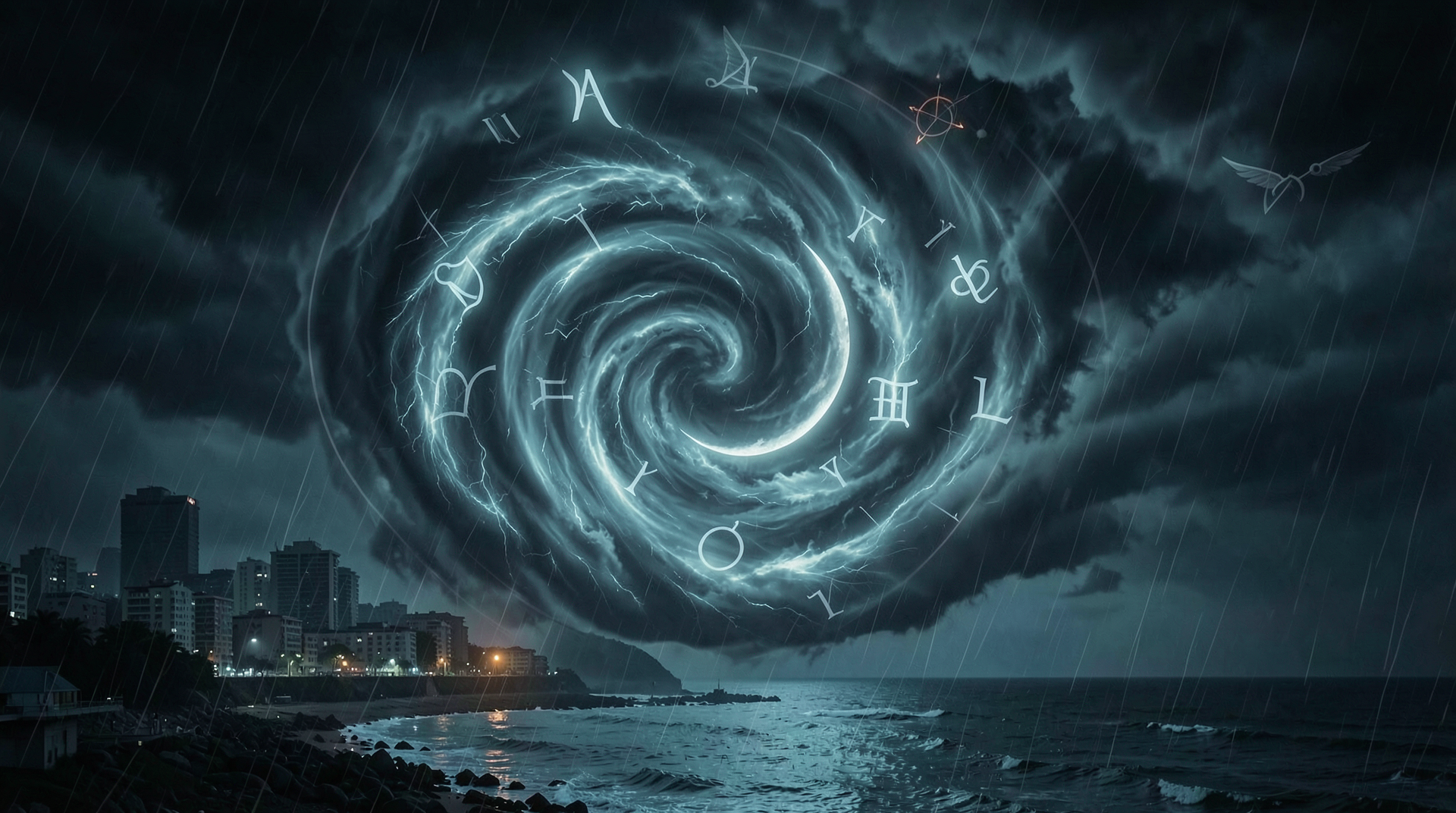
The wind has dropped, but the accounting has only begun. As Typhoon Maysak churned through southern China, it left behind a grief-stricken toll: at least 39 people dead and nine still missing, a number that rescue crews fear may still rise. What began as a season of violent weather across East Asia — a typhoon that shredded coastlines and flooded lowlands in its path — has now hardened into one of the region's deadliest single disasters of 2026.
This is not the story of the storm's arrival, which we have already traced. This is the story of the morning after: the counting, the search, the mourning, and the long, slow work of rebuilding a landscape that no longer looks the way it did a week ago.
What the Ledger Shows
Across the southern provinces — Guangdong above all, with the hardest-hit communities clustered near the Pearl River Delta — families spent a sleepless week searching flooded villages and mud-swept hillsides. Emergency crews waded through chest-high water to reach stranded households, while helicopters scoured ravines for signs of the missing.
Official figures put the damage in stark numbers:
- At least 39 confirmed dead across the affected provinces
- Nine people still missing, with search operations ongoing
- Tens of thousands relocated as floodwaters inundated homes
- Roads, bridges, and power lines severed across a swath of the coast
The human dimension resists arithmetic. Each number is a neighbor, a parent, a child whose routine was interrupted by a storm surge that arrived faster than any forecast. For those who survived, the immediate terrain is unfamiliar — kitchens underwater, livelihoods swept away, and a community suddenly defined by what it has lost.
The Sky Over Southern China: A Chart of Transformation
For readers of the celestial weather, the date of this reckoning — August 11, 2026 — lands in an unusually heavy portion of the sky. Casting the moment's transits against the People's Republic's foundational chart (October 1, 1949) reveals why this disaster has carried such weight.
The most striking signature is transit Sun falling almost exactly on China's natal Pluto (within about a degree). The Sun represents the nation's essence and leadership; Pluto is the planet of destruction and radical rebirth. When the two meet, events that are simultaneously traumatic and transformational tend to surface — a collapse that forces a society to rebuild itself differently.
Reinforcing this is transit Pluto sitting nearly on China's natal Ascendant — the chart's "face" to the world — an aspect astrologers associate with a collective identity under deep pressure, where old structures must give way before something new can rise. Pluto here is not gentle; it unbuilds before it allows rebuilding.
Completing the picture, Mars and Uranus are still conjoined in Gemini, the pairing that drove the storm's original violence. By the date of the death-count report, Mars has crept to 29° Gemini — the anaretic, "final degree" of the sign — stationed in the transit chart's eighth house, the sector of shared resources, crisis, and the profound losses that reshape a community's foundations.
The Waning Crescent: A Time to Release and to Rebuild
The Moon on this day hovers in the waning crescent phase — the last sliver of light before a new cycle begins. In mundane astrology, this is the season of letting go. It is the lunar moment when debts are tallied, when what must be mourned is mourned, and when a society quietly gathers what it carries forward.
That symbolism matches the ground truth in southern China. This is not a phase for triumphant announcements or bold new initiatives; it is a phase of cleanup, of inventory, of absorbing loss and making the first tentative arrangements for what comes next.
For the region's leaders, the waning crescent counsels prudence over performance. The most valuable work right now is unglamorous: reliable water, restored power, safe shelter, and honest communication about who is still unaccounted for.
Challenges Ahead: When the Recovery Itself Is Hard
Astrology offers guidance, not guarantees — and the lessons here are sobering ones. Several factors suggest the road back will be longer and more fragile than many hope.
Saturn retrograde in Aries in the sixth house governs daily systems, labor, and public services. Saturn retrograde is the great rechecker — it insists that shortcuts be taken apart and rebuilt correctly. In a flood zone, that translates into infrastructure that was already weak being tested again: drainage that failed, levees that were never upgraded, and emergency protocols that now face scrutiny. Expect reconstruction to be patient, bureaucratic, and occasionally frustrating.
Pluto's touch on the Ascendant warns of power struggles and contested narratives in the aftermath — over blame, over funding, over who speaks for the dead. Pluto can surface uncomfortable truths. The healthy response is accountability; the shadow response is scapegoating.
And Uranus in the seventh house, still in its square with the nation's natal Uranus, represents sudden reversals in partnerships and alliances. Aid may arrive unevenly; support promised at a distance may not match what arrives on the ground. Communities should plan to rely on themselves first, and expect cooperation to need constant, explicit renegotiation.
Practical Cautions for Readers
For those who follow these transits personally, there are grounded, unmagical takeaways:
- During a waning crescent in this heavy planetary weather, delay major commitments. Signing contracts, launching projects, or making irreversible decisions in the immediate aftermath of a high-Pluto period rarely improves with haste.
- Double-check safety protocols. Saturn retrograde and the Mars–Uranus conjunction are classic signals to re-verify infrastructure, travel routes, and emergency plans — especially for anyone living in or traveling through storm-prone and flood-prone regions.
- Be wary of absolutes in the news. Pluto and Neptune in the mix encourage both panic and misinformation. Verify casualty figures, donation channels, and official advisories from reliable sources before acting or spreading them.
- Honor grief before rushing to "fix." Pluto's lesson is that transformation is not a quick switch. Communities and individuals both need time to process loss before they can genuinely rebuild.
The Astrology of Resilience
Every difficult chart carries a constructive current, and this one is no exception. For all of Pluto's heaviness, the mid-August sky also holds Jupiter in Leo, the planet of expansion and hope, loosely conjunct China's own natal Mars and Pluto. Jupiter in Leo is the sign of the phoenix — of creative energy, warm-hearted leadership, and the stubborn refusal of a community to be defined by its disaster.
There is also Venus in Libra moving toward applying aspects that favor reconciliation and care — the softer face of the same sky that delivered the storm. Diplomacy, humanitarian coordination, and the quiet acts of mutual aid that flood Southern China has long been known for are expressions of that Venusian grace.
The waning crescent will pass, and a new Moon — the Leo New Moon of August 12 — will usher in a fresh cycle. That new beginning will not erase the crater of this disaster, but it will offer a horizon to walk toward. The dead are not honored by despair; they are honored by the slow, stubborn, dignified work of continuing.
A Responsible Word
Astrology is a language of symbols and tendencies, not a predictive science, and certainly not a substitute for meteorological data, engineering, or compassionate emergency response. This analysis is offered as a lens for reflection — a way of finding meaning in something that otherwise feels unbearably random. It is not a prescription for policy and not a claim to know the future. The safest reading is the most humble one: The sky mirrored a difficult time, and human beings, as they always do, must now do the difficult, ordinary, heroic work of putting things right.
Conclusion
Typhoon Maysak has receded into the Pacific, but its record remains written across southern China's coast in flooded homes and grieving families. Thirty-nine lives, and nine still unaccounted for, form a ledger no chart can balance.
Yet the same sky that carried misfortune also carries renewal. Saturn's frozen gavel will eventually lift; Pluto's destruction carries within it the seed of rebuilding; and a waning crescent always yields to new light. The storm taught the region what it stands to lose, and what — if it chooses — it can build in the aftermath. The deepest truth of the chart is not the wound, but what a society does with the wound. That remains entirely, humanly, in our hands.
Related Articles

The North Node Stations Direct at 29° Aquarius (Oct 3): A Karmic Pivot at the Threshold of Pisces
October 2, 2026
On Oct 3, 2026, the North Node stations direct at 29° Aquarius — the anaretic threshold crossing into Pisces. What this karmic pivot (and the Venus retrograde on the same day) means for you.

Sun Opposes Saturn on October 4 — the Day After the Last Quarter Moon: Libra Season's Accountability Check
October 1, 2026
The Sun opposes retrograde Saturn on October 4, 2026 — the day after the Last Quarter Moon in Cancer. What Libra season's accountability check means for relationships, work, and money, plus who feels it most and how to use it.
Mars Races Toward Jupiter in Leo All Week: The 8th-House Power Surge Paving 2026's Biggest Conjunction
September 30, 2026
Mars enters Leo this week and begins its sprint toward Jupiter — the 8th-house power surge that paves the way for 2026's biggest conjunction on Nov 14–15. Plus Venus retrograde cautions and what to do now.

Mercury Enters Scorpio on September 30: The Diplomat Becomes a Detective
September 29, 2026
Mercury enters Scorpio on September 30, 2026, trading the diplomat's scales for the detective's magnifying glass. What the intense ingress, the Mars–Pluto face-off, and the coming Scorpio Mercury retrograde mean for communication, research, and relationships.