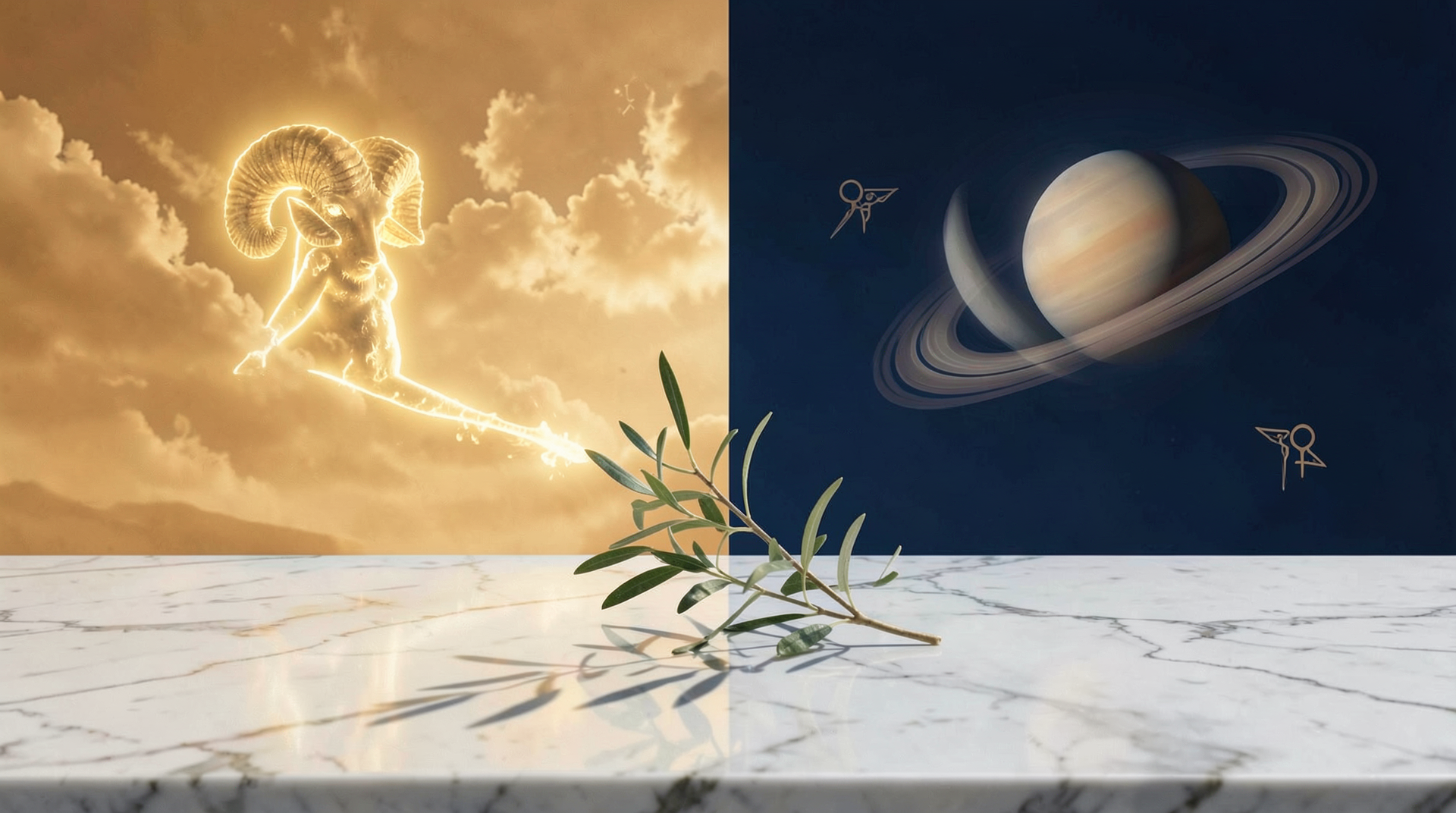
Saturn on the Lion's Throne: The Astrology of the U.S.-Iran Memorandum Ceremony and a Nation's Cosmic Reckoning
The digital ink was barely dry when the announcement arrived: an official ceremony to formalize the U.S.-Iran memorandum, penciled for June 19, 2026. But as the world watched and waited — confirmation still pending — the astrological chart for that date told a story far more complex than any diplomatic press release could convey.
On paper, a memorandum ceremony between Washington and Tehran would already qualify as one of the most geopolitically significant events of the decade. Nearly half a century of estrangement, sanctions, proxy conflicts, and near-misses does not unwind over a single signing table. But the heavens on June 19, 2026, did not offer a straightforward blessing. They offered a test — one written in the language of anaretic degrees, Saturnian reckonings, and the uncomfortable friction between a nation's founding chart and the planetary weights pressing down upon it.
The Date Itself: An Anaretic Sun at Gemini's Final Degree
The Sun on June 19 sat at 28° Gemini — the anaretic, or "crisis," degree. In astrology, the 29th degree of any sign carries an urgent, fated quality: the last gasp before a threshold is crossed. Gemini rules communication, agreements, contracts, and the exchange of information. An anaretic Sun in Gemini on the day of a diplomatic ceremony is not neutral. It suggests that whatever is signed, spoken, or promised carries the weight of finality — and the risk of words outrunning reality.
Adding to the threshold quality: the transiting North Node had just slipped into 1° Pisces, having recently crossed the 0° Aries point — the world-axis degree associated with public events of global consequence. The lunar nodes at the Aries-Pisces boundary signal a collective karmic pivot from self-assertion toward dissolution, from confrontation toward surrender. Any agreement born under this nodal shift would be asked, sooner or later, whether it was forged from genuine mutual understanding or mere exhaustion.
⚠️ Astrological Caution: Ceremonies held under anaretic Suns — especially in Gemini — have a documented tendency to produce agreements whose fine print unravels under scrutiny. The "crisis degree" energy can manifest as last-minute complications, missing details, or promises that prove unsustainable once the Sun ingresses into Cancer and emotional realities surface.
Saturn Conjunct Iran's Natal Sun: The Cosmic Reckoning
This is the headlining transit, and it is impossible to overstate its significance.
The Islamic Republic of Iran's founding chart (April 1, 1979, Tehran, 12:00 PM) places the natal Sun at 11° Aries in the 10th House of national standing and leadership. Aries is the sign of sovereignty, self-determination, and the warrior archetype — a fitting signature for a revolutionary state whose identity was forged in defiance of external pressure.
On June 19, 2026, transiting Saturn sat at 13° Aries — just over 2° from Iran's natal Sun, and applying. Saturn conjunct the natal Sun is one of the most sobering transits in mundane astrology. It is the planetary equivalent of a mirror being held up to a nation and a voice saying: This is who you really are. Not who you claim to be. Not who you wish you were. Who you are.
When Saturn — the planet of hard reality, limitation, structure, and consequence — sits on a nation's Sun, that nation faces a moment of enforced honesty. For Iran, this transit raises questions that no ceremony can sidestep:
- Has the revolutionary identity of 1979 matured into something sustainable, or has it calcified into rigidity?
- Can the state's Aries Sun — proud, independent, combative — make room for the compromises that any binding international agreement demands?
- Is this memorandum a genuine structural shift, or a tactical pause?
The conjunction also falls across Iran's natal Midheaven at 8° Aries. The MC represents a nation's public face, its direction, its leadership's standing in the world. Saturn transiting here often coincides with moments when a country is judged — fairly or unfairly — by the international community. The weight is heavy. The scrutiny is real.
The Saturn-Neptune Proximity
Complicating matters further: transiting Neptune at 4° Aries sits just behind Saturn, also in orb of Iran's natal Sun and MC. Where Saturn demands clarity and hard choices, Neptune dissolves boundaries, invites idealism, and — in its shadow — enables self-deception or obfuscation. The Saturn-Neptune pair traveling through Aries together in 2026 has been one of the defining astrological signatures of the year, and for Iran it lands directly on the nation's solar identity.
The risk: Saturn says "sign something real." Neptune whispers "it can mean whatever you need it to mean." A ceremony born under both influences could produce an agreement whose interpretation diverges sharply between the signatories within months.
⚠️ Warning: The Saturn-Neptune conjunction in Aries (exact later in 2026) over Iran's Sun is a classic signature for agreements where each party believes they signed a different document. Clarity of language, verification mechanisms, and third-party oversight are not optional — they are astrologically imperative.
Jupiter on the Ascendant: Expansion or Overreach?
Iran's natal Ascendant sits at 22° Cancer, and on June 19, transiting Jupiter at 27° Cancer was applying to a conjunction with it — as was transiting Mercury at 22° Cancer. Jupiter on the Ascendant is, in isolation, a positive transit: expansive, optimistic, opening doors to the wider world. It suggests a moment when a nation can appear magnanimous, generous, forward-looking.
But Jupiter in Cancer is also the signature of emotionally driven expansion. It can inflate nationalist sentiment, amplify pride in heritage and sovereignty, and — when challenged — harden into defensiveness. Combined with Mercury so close to the Ascendant, the chart suggests a ceremony where the messaging and the optics carry as much weight as the substance.
The danger of Jupiter on the Ascendant during a Saturn-Sun transit is precisely that the Jupiterian optimism masks the Saturnian gravity. It is easy to celebrate a diplomatic breakthrough while ignoring the structural weaknesses in what was actually agreed.
Uranus Conjunct the Natal Moon: A Restless Public
Iran's natal Moon at 5° Gemini — representing the national mood, the people, the collective emotional pulse — received a direct conjunction from transiting Uranus at 3° Gemini on June 19.
Uranus on the natal Moon is electrifying, unpredictable, and destabilizing to the status quo. In Gemini, it speaks to a public hungry for information, for change, for a break from the narratives that have defined their lives. The Iranian population — young, digitally connected, and restive — is not a passive observer of diplomatic theater. Uranus transiting the natal Moon suggests that whatever was agreed in the ceremony room would face immediate, vocal, and possibly volatile public reaction.
This transit also squares Iran's natal Saturn at 8° Virgo (2nd House), creating a tension between the revolutionary impulse for change (Uranus-Moon) and the entrenched structures of the state's economic and value systems (Saturn in Virgo). A memorandum that promises economic relief but delivers it slowly — or conditionally — will find itself caught in this exact friction.
Chiron at 29° Aries: The Wounded Warrior at the Gate
Transiting Chiron at 29° Aries — the anaretic degree of the warrior sign — fell in Iran's 9th House of foreign relations, international law, and long-distance diplomacy. Chiron represents the wound that cannot be fully healed but must be acknowledged and tended. At the crisis degree of Aries, it speaks to the specific pain of a nation whose identity was forged in resistance to external domination and whose relationships with foreign powers have been marked by mistrust, sanctions, and military confrontation.
A ceremony held under Chiron at this degree does not promise healing. It promises the opportunity to look directly at the wound. Whether that looking leads to genuine treatment or to further inflammation depends entirely on the human beings in the room.
The U.S. Chart: A Parallel Strain
While the most dramatic transits fall on Iran's chart, the United States' Sibly chart (July 4, 1776) does not escape unscathed. Transiting Saturn at 13° Aries squares the U.S. natal Sun at 13° Cancer — a transit that, by July 6, 2026, had become exact (Sun square Saturn at 14° Cancer-Aries).
This means that as Iran faced its Saturn-on-Sun reckoning, the United States was simultaneously under the pressure of a Saturn square to its own solar identity. The square aspect is one of friction, obstacle, and forced adjustment. For the U.S., Saturn squaring its Cancer Sun raises uncomfortable questions about national maturity, the limits of power, and whether the "city upon a hill" can adapt to a multipolar world without losing its sense of self.
Two nations, both under Saturn's gaze, sitting across a negotiating table from each other. This is not a victor's ceremony. It is a meeting of two entities being humbled — each in its own way — by the same planetary taskmaster.
Mercury Retrograde: The Post-Ceremony Landscape
By the first week of July 2026, Mercury had stationed retrograde in Cancer — and the astrological community was deep in its familiar mantra: review, revise, reconsider. Mercury retrograde periods are notoriously difficult for finalizing agreements, and any memorandum signed (or ceremonially affirmed) on June 19 fell squarely into the pre-retrograde shadow period.
This does not mean the agreement is doomed. But it does mean that the weeks and months following the ceremony are almost guaranteed to bring:
- Reinterpretations of what was agreed
- Technical annexes and clarifications that alter the spirit of the original text
- Domestic political pushback in both countries as the fine print surfaces
- Delays in implementation that test the commitment of both parties
The Mercury retrograde in Cancer — the sign of national identity, homeland, and emotional security — specifically raises questions about whether the memorandum adequately addresses the felt needs of both populations, not just the strategic calculus of their governments.
⚠️ Astrological Guidance: During Mercury retrograde (July 2026), all parties to this agreement would be well advised to avoid rushing implementation, to double-check translations and interpretations, and to expect — rather than resist — the need for revisions. The retrograde is not a curse; it is an invitation to get it right.
The Lunar Phase: Waxing Crescent
The Moon on June 19 was a Waxing Crescent in Leo — a phase associated with new beginnings, the first visible steps after a new cycle is seeded. The Leo Moon carries dignity, pride, and a certain theatricality — entirely fitting for a ceremonial occasion. But the Waxing Crescent is also fragile: the sliver of light is easily obscured by clouds. The seeds planted at this phase require consistent nurturing to survive. They do not thrive on neglect.
Downsides, Risks, and the Long View
No astrological analysis of a diplomatic event is complete without an honest assessment of what could go wrong. The June 19 chart, for all its potential, carries significant red flags:
| Risk Factor | Astrological Signature |
|---|---|
| Agreement fragility | Anaretic Sun (28° Gemini) + pre-retrograde Mercury |
| Divergent interpretations | Saturn-Neptune conjunction over Iran's Sun |
| Domestic backlash | Uranus conjunct Iran's natal Moon |
| Implementation delays | Mercury retrograde in Cancer (July 2026) |
| Overpromising | Jupiter on Iran's Ascendant during Saturn transit |
| Unaddressed wounds | Chiron at 29° Aries in 9th House |
| Power imbalances | Pluto retrograde in Aquarius opposing Iran's natal Pluto in Libra |
The most concerning pattern is the tension between Jupiter's expansiveness (promises, optics, grand gestures) and Saturn's demand for structural integrity. Ceremonies are, by nature, Jupiterian affairs. But the Saturn-on-Sun transit asks whether the ceremony reflects reality or merely decorates it.
What to Watch For
If you're tracking this story astrologically, here are the key dates ahead:
- July 7, 2026 — Neptune stations retrograde at 4° Aries: The fog begins to clear. Hidden details about the memorandum may surface.
- July 14, 2026 — Cancer New Moon: A potential reset point for emotional and diplomatic tone.
- Late August 2026 — Mercury direct, then exits post-shadow: The retrograde review period ends. Implementation clarity should emerge.
- November 2026 — Saturn stations direct at ~10° Aries: Saturn's second pass over Iran's Sun. A moment of truth.
A Necessary Disclaimer
Astrology offers a symbolic language for understanding the archetypal currents beneath world events. It does not predict specific outcomes with certainty, nor should any astrological analysis be mistaken for political endorsement, foreign policy prescription, or geopolitical forecast. The stars incline; they do not compel. The choices made by diplomats, leaders, and citizens on the ground remain the decisive factor in whether a memorandum becomes a foundation for peace or a footnote in a longer history of estrangement.
What astrology can do — and what this analysis attempts — is illuminate the psychological, structural, and karmic dimensions of a moment. June 19, 2026, was not an ordinary date. It was a threshold. Whether it was crossed wisely is a question that will be answered not in the stars but in the slow, unglamorous work of implementation, verification, and trust-building that follows any signed document.
The ceremony, pending confirmation, remains a story in progress. The planets have set the stage. The actors are still on it.
Related Articles
The Moon's Wane Across 2026-W40: Aries Fire, Taurus Ground, Gemini Air, Cancer Water — Into the Last Quarter
October 4, 2026
Week 40 of 2026 sees the waning Moon tour all four elements — Aries fire, Taurus earth, Gemini air, Cancer water — reaching the Last Quarter on Oct 3 alongside Venus turning retrograde. Here's how to ride the release.
Chiron Hovers at 29° Aries: The Anaretic Degree on the Final Fall of the Aries Wound-Healing Era
October 3, 2026
On Oct 3, 2026, Chiron retrogrades to the anaretic degree of 29° Aries — the final fall of the eight-year Aries wound-healing era before its 2027 homecoming to Taurus.

The North Node Stations Direct at 29° Aquarius (Oct 3): A Karmic Pivot at the Threshold of Pisces
October 2, 2026
On Oct 3, 2026, the North Node stations direct at 29° Aquarius — the anaretic threshold crossing into Pisces. What this karmic pivot (and the Venus retrograde on the same day) means for you.
Sun Opposes Saturn on October 4 — the Day After the Last Quarter Moon: Libra Season's Accountability Check
October 1, 2026
The Sun opposes retrograde Saturn on October 4, 2026 — the day after the Last Quarter Moon in Cancer. What Libra season's accountability check means for relationships, work, and money, plus who feels it most and how to use it.