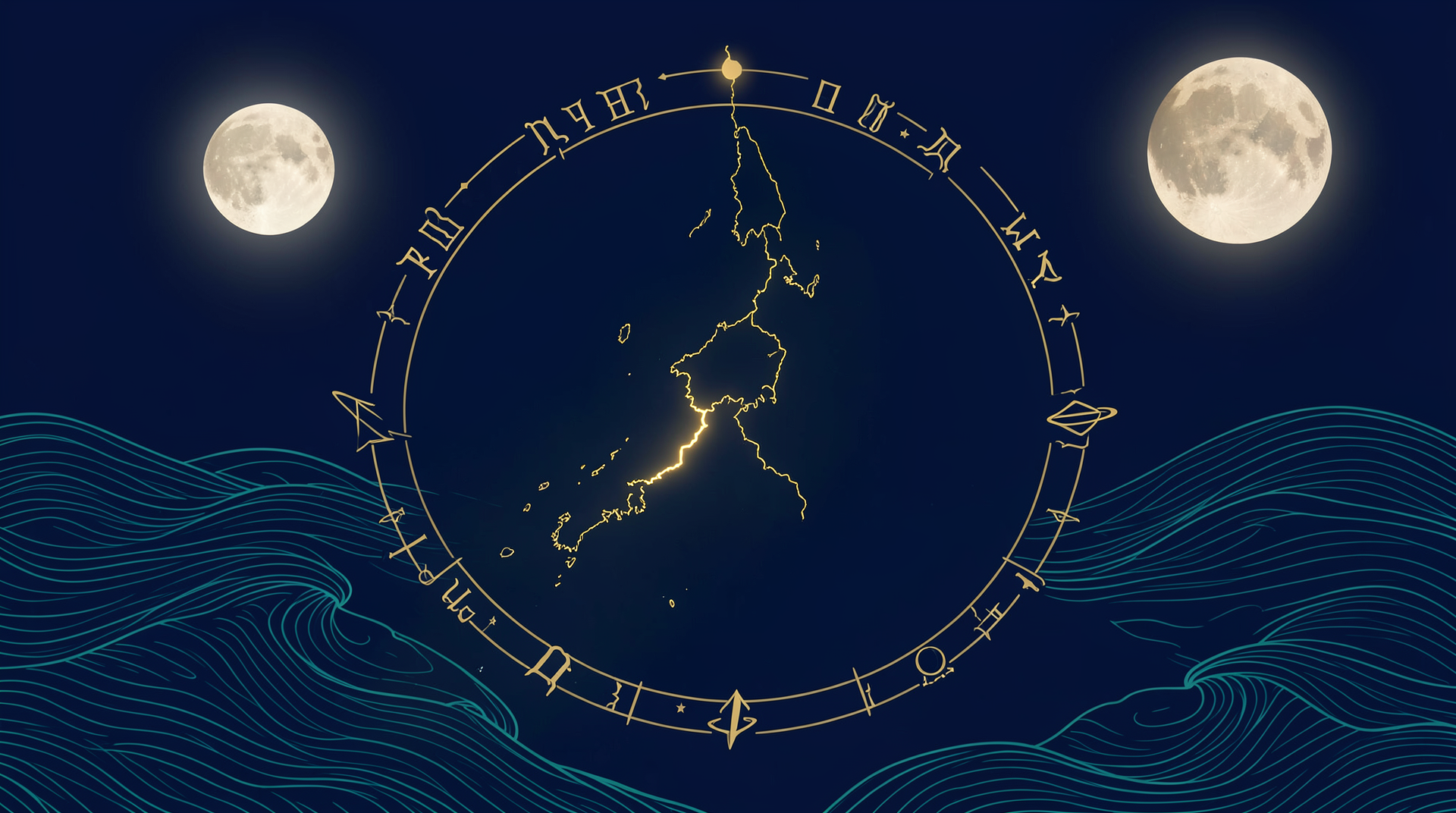
At 23:07 on the night of February 13, 2021, the seafloor off the coast of Fukushima snapped. A magnitude 7.1 earthquake — an aftershock of the catastrophic 2011 Tōhoku quake, triggering on the ten-year anniversary of nothing anyone wanted to remember — ripped along a fault that sits about 60 kilometers east-northeast of Namie. Phones screamed. Bullet trains froze mid-track. The Japan Meteorological Agency (JMA) pushed tsunami advisories to the coasts of Fukushima and Miyagi.
And then… almost nothing happened.
No deaths from falling buildings. No catastrophic wave. A few dozen injuries, a handful of indirect fatalities, some cracked tiles and toppled shelves — and a Tohoku Shinkansen that derailed without hurting a soul. For a shallow 7.1 shaking a coastline that millions of people call home, it was the closest thing seismology has to a miracle: a disaster that was tested, and refused to become one.
This article looks back at that night — at the warning infrastructure that carried it, the building codes and collective memory that cushioned it, and the extraordinary astrological sky that framed it. Because the chart of that earthquake, cast for the moment the ground moved off Namie, reads like a masterpiece of tension narrowly resolved — and its sequel is still written in the sky above us today.
The Night the Ground Didn't Win
The event at a glance — February 13, 2021, 23:07 JST (14:07 UTC)
| Detail | Value |
|---|---|
| Magnitude | 7.1 (JMA); 7.1 (USGS) |
| Epicenter | Off the coast of Fukushima Prefecture, ~60 km ENE of Namie |
| Depth | ~55–60 km |
| Maximum intensity | JMA shindo 6-upper (parts of Miyagi & Fukushima) |
| Tsunami | Advisory issued for Fukushima & Miyagi coasts; waves of ~20–30 cm observed; lifted by morning |
| Casualties | No direct deaths; ~150–185 injuries; a small number of deaths attributed to indirect causes (stress-related cardiac events) |
| Infrastructure | ~885,000 households lost power at peak; Tohoku Shinkansen derailed (no injuries); water-line breaks and minor landslides |
| Context | Aftershock of the March 11, 2011 M9.1 Tōhoku earthquake — one month before its 10th anniversary |
Compare that with what a 7.1 could do. The 2023 Turkey–Syria earthquakes (7.8 and 7.5) killed tens of thousands. The 2010 Haiti quake was 7.0 and killed over 200,000. Magnitude alone doesn't decide a tragedy — preparedness does — and Tohoku, in February 2021, was the most prepared coastline on Earth.
Why the Wave Never Came: A Warning System, Tested Live
The minimal toll wasn't luck. It was the accumulated product of a decade of trauma converted into engineering. Consider what was working, all at once, at 11 PM on a winter Saturday:
- Earthquake Early Warning (EEW): Japan's network of seismometers detected the primary waves and pushed alerts to millions of phones and broadcasts seconds before the strongest shaking arrived — enough time to stop trains, halt elevators, and brace.
- Automated transport shutdown: The Tohoku Shinkansen's sensors triggered emergency braking; the train that derailed did so while already slowing, which is why nobody aboard was hurt.
- Tsunami advisories, issued and respected: The JMA issued an advisory (not a full warning) for Fukushima and Miyagi. Coastal residents, drilled for a generation, moved to higher ground on reflex even for 30 centimeters of sea.
- A decade of retrofitting: Post-2011 building-code upgrades, seismic isolation, and gas-shutoff valves meant the shaking passed through homes like a hand through water.
- The loudest warning system of all: memory. Every adult in Tohoku remembers March 11, 2011. That memory, institutionalized into drills and evacuation routes, is invisible infrastructure — and it is the most effective warning system ever built.
Astrologically, this is worth sitting with: a Mercury-retrograde sky tested the nervous system of a nation's communication networks — and the messages went out anyway. The retrograde, far from being the villain, became the symbol of the whole night: information moving against the current, rerouted, reviewed — and landing exactly where it needed to be.
The Chart of the Shake: Scorpio Rising at the Bottom of the Night
For astrologers, major events are cast like births: the moment the ground moves becomes a chart with its own "personality." The chart for February 13, 2021, 23:07, off the coast of Namie (37.7°N, 141.9°E), is one of the most legible event charts in recent memory.
Scorpio rising, 8°28′. The quake "wore" Scorpio on its face: depth, crisis, the underworld, transformation through contact with what is buried. An earthquake is, quite literally, Scorpionic — something hidden beneath the crust forcing its way into the open.
The Sun at 25° Aquarius, buried in the 4th house (the IC). Near midnight, the Sun — the chart's identity — sat at the very bottom of the wheel, in the house of foundations, home, and the earth beneath our feet. The symbolism writes itself: the center of the event lived underground.
Five planets in Aquarius — Sun, Mercury (retrograde), Venus, Jupiter, and Saturn — 44% air, 78% fixed. The entire chart is a fixed-air architecture: networks, grids, systems, societies holding form against change. This is the sky of a civilization whose identity is infrastructure — which is exactly what the night was about.
Moon conjunct Neptune in Pisces at 16°30′/19°41′, near the IC. The Moon and the fog-planet stood together in the oceanic sign, in the house of the deep. This is the classic signature of the sea: boundary dissolution, flooding, the amniotic ambiguity of water. That it sits near the bottom of the chart, in the underworld house — and that the sea, this time, stayed home — is the near-miss written in glyphs.
Mars in Taurus in the 7th house, with Uranus conjunct the Descendant (7°07′ Taurus). Mars, the planet of force, stood on the western horizon — the "others" of the chart, the facing field — grinding slowly in the sign of the earth. Beside it, Uranus the Awakener sat almost exactly on the Descendant, the lightning-rod of sudden rupture. The ocean (the "other" that faces Japan) didn't merely observe the shake; it was part of the conversation.
Saturn Square Uranus: The Four-Day Question
And then there is the signature that makes this chart a collector's item.
Saturn in Aquarius at 6°45′ squared Uranus in Taurus at 7°07′ — an orb of just 0°22′.
The Saturn–Uranus square of 2021 was the structural aspect of the year: the conservative builder (Saturn) grinding against the revolutionary breaker (Uranus) across the fixed signs of network and soil, Aquarius and Taurus. Astrologers wrote essays about it all year — governments versus insurgent technologies, old orders versus new, the earth itself versus the systems built on it. In mundane astrology, the square is classically associated with literal tectonics: the cracking of structures, whether political, economic, or geological.
Here's the part that makes the hair stand up. The first exact hit of the Saturn–Uranus square came on February 17, 2021 — four days after this earthquake. The 23:07 shake off Fukushima arrived as a preview of the structural square, a dress rehearsal in the earth itself, four days before the sky made it exact.
And what did the rehearsal look like? A structure flexed, warned, held, and did not collapse. Read symbolically, the quake was the square's message; the warning systems were the answer. Tension (Saturn's austerity PLUS Uranus's rupture) met resilience (buildings, drills, alerts, memory) — and resilience won the round.
It is worth being precise here, though: astrology describes patterns; it does not control plate tectonics. A dramatic alignment does not "cause" an earthquake any more than an earthquake "causes" a horoscope. But when a 7.1 fires four days before the most famous structural square of a decade, in a chart already dripping with fixed-sign tension, even a skeptic can pause to note how loudly symbol and event can rhyme.
The Near-Miss Signatures: Quintiles and the Crescent Moon
If the chart's harsh aspects explain why the ground moved, its gentler ones explain why it didn't move further:
- Sun quintile Uranus — an orb of ~0°01′. The quintile is the "genius" aspect, a 72° harmonic of creative, unexpected revelation. The Sun in the deep 4th house stood in startlingly precise quintile to the lightning planet on the horizon: a sudden flash — but a generative one, a burst of insight rather than obliteration. Astrologers who work with harmonics would call this the fingerprint of a shock that informs instead of destroys.
- Mars trine Pluto (~6° orb). The force in Taurus and the transformer in Capricorn worked with each other — slow, deep, transformative pressure that moves underground and rearranges foundations gradually. A fitting aspect for an aftershock: the same deep machinery, operating at lower volume, over years.
- A waxing crescent Moon. The event chart's lunar phase was a crescent — initiation, the first visible sliver of a new cycle. The quake was not an ending; it was the opening chapter of the region's continuing aftershock story, and of the long, ongoing work of rebuilding trust with the earth.
- Pluto in late Capricorn (25°36′), completing its final sweeps before entering Aquarius in 2023. The decade of "structure-crumbling Pluto in Capricorn" was ending; the ground's deepest convulsions were, in a very real sense, winding down.
Five Years Later: The Sky Above Disaster Prevention Day
The retrospective has a second act, because we are publishing this on a date the Japanese calendar marks with intent: September 1 — Disaster Prevention Day, the annual nationwide drill day commemorating the 1923 Great Kantō earthquake, in which over 100,000 people died — mostly by fire, mostly because no one had prepared.
If we cast the sky over Tokyo at noon on Disaster Prevention Day 2026, and compare it with the quake chart, the conversation is startlingly coherent:
- Transit Jupiter at 13°44′ Leo sits within ~1°17′ of the quake chart's Midheaven (15°01′ Leo). Jupiter, the great expander and teacher, is standing on the public axis of the 2021 event chart on the very day Japan rehearses its survival. Disaster Prevention Day 2026 carries the signature of a harvest: the lessons of 2011, 2021, and every drill in between, maturing into visible social wisdom.
- The transit Sun at 8°43′ Virgo sextiles the quake's Scorpio Ascendant within ~0°15′. The conscious daylight of the present connects, with almost surgical precision, to the rising point of that February night. Awareness and memory are meeting in a gentle, workable aspect — a reminder that can arrive without re-traumatizing.
- Transit Pluto (3°31′ Aquarius, retrograde) is reconnecting with the quake's Aquarius stellium — currently within ~3° of the event's Saturn. The generational transformer is circling back to finish the deep work the shake began: the transformation of how a society holds its foundations. This is long-wave, karmic-slow astrology — the kind that operates over decades.
But a responsible reading must also sound the counterpoint, because preparedness is a practice, not a guarantee:
- Transit Uranus in early Gemini squares the quake chart's Pluto in Capricorn — the Awakener is still square to the deep transformer, a web of unresolved structural tension.
- Saturn and Neptune, both retrograde in Aries, hover over the emergency-response sectors of the modern chart, dissolving and disciplining at once — a reminder that fog, confusion, and over-confidence are perennial hazards in any crisis.
- The Moon on Disaster Prevention Day is waning gibbous in Aries at 27°08′ — an anaretic degree, the edge-of-the-sign urgency point. The emotional weather of the day itself is edgy, impatient, combustible. Perfect for a drill. Dangerous for complacency.
The 2026 sky, in other words, says: you have earned your resilience, and you must keep earning it.
What the Warning Systems Could Not Do — And What Astrology Can't Either
Let's give the honest ledger its due. The night of February 13, 2021, was a triumph — but it was a contingent triumph:
- Advisories are not predictions. The JMA's tsunami advisory was based on models that could have been wrong; a slightly larger rupture, or a shallower one, would have rewritten the night. The margin between "advisory" and "warning" is a hair's breadth, and Japan knows it better than anyone.
- The sea can't be negotiated with. 2011 proved that waves outrun assumptions, that seawalls fail, that the "maximum" is a moving target. The 2021 near-miss doesn't cancel that lesson; it repeats it in a gentler key.
- Mercury retrograde cuts both ways. Yes, the warnings went out — but retrograde communication is precisely where messages get delayed, mis-routed, or missed. The system worked despite the sky, not because of it.
- Astrology is a lens, not a lever. No aspect causes a quake and no aspect prevents one. Charts offer a language for reflecting on patterns — structure, rupture, warning, response — not a transportation schedule for fate. Use them to think; don't use them to predict, and never let a horoscope talk you out of a drill.
Conclusion: The Warning Is the Miracle
The M7.1 that struck off Fukushima on February 13, 2021, is remembered — when it is remembered at all — as the earthquake that wasn't. And that's precisely the point. A disaster averted becomes invisible; the warning systems that held become background noise; the drills become routine. But the astrology of the moment refuses to let it fade: a Saturn–Uranus square four days away, a Scorpio rising in the midnight dark, a Moon-Neptune embrace over a sea that chose restraint, and a retrograde Mercury that still managed to deliver every message on time.
Perhaps that is the truest reading of the chart. Tension is inevitable — in the earth, in the sky, in life. Response is a choice. Japan's response that night was the accumulated choice of a decade: build better, warn faster, drill harder, remember everything. The stars framed the test. The people passed it.
As you go about your Disaster Prevention Day — or simply your Tuesday — let the near-miss off Namie remind you of something astrologers and seismologists actually agree on: the most reliable protection is not prediction. It is preparation, repeated until it's reflex.
Astrological guidance is offered for reflection and self-understanding, not as a substitute for expert advice, emergency planning, or professional judgment. In matters of safety — seismic or otherwise — trust the engineers, the meteorologists, and the trained responders first. The stars illuminate; they do not insure.
Related Articles
Mercury Is Tapping the Brakes in Scorpio: Finish Your Detective Work Before Its Late-October Retrograde
October 16, 2026
Mercury is slowing in late Scorpio before its October 22–24 retrograde station. A practical guide to finishing your detective work, sealing your contracts, and surviving the November rewind.
The October 15–18 Stand-Still: Pluto, the North Node, and the First Quarter Moon Line Up Their Stations
October 15, 2026
From October 15–18, 2026, Pluto's direct station at 3° Aquarius, the North Node's brake at the 29° Aquarius threshold, and the First Quarter Moon in Capricorn line up into a rare celestial standstill. Here's what the pause means — and how to work it.
First Quarter Moon in Capricorn (Oct 18): The Week's "Commit or Release" Moment
October 14, 2026
The First Quarter Moon in Capricorn (Oct 18, 2026, 16:10 UTC) squares the Libra Sun — a cosmic checkpoint asking you to commit or release. Plus Venus retrograde cautions, Pluto's station, and a do/don't guide for the week.
Venus Retrograde in Scorpio Squares Pluto All Week: The Love-and-Power Test Peaking Around Oct 20
October 13, 2026
Retrograde Venus in Scorpio squares Pluto all week, exact around Oct 19–20 as Pluto stations direct. How to survive the love-and-power test — what to avoid, who feels it, and how to pass it.