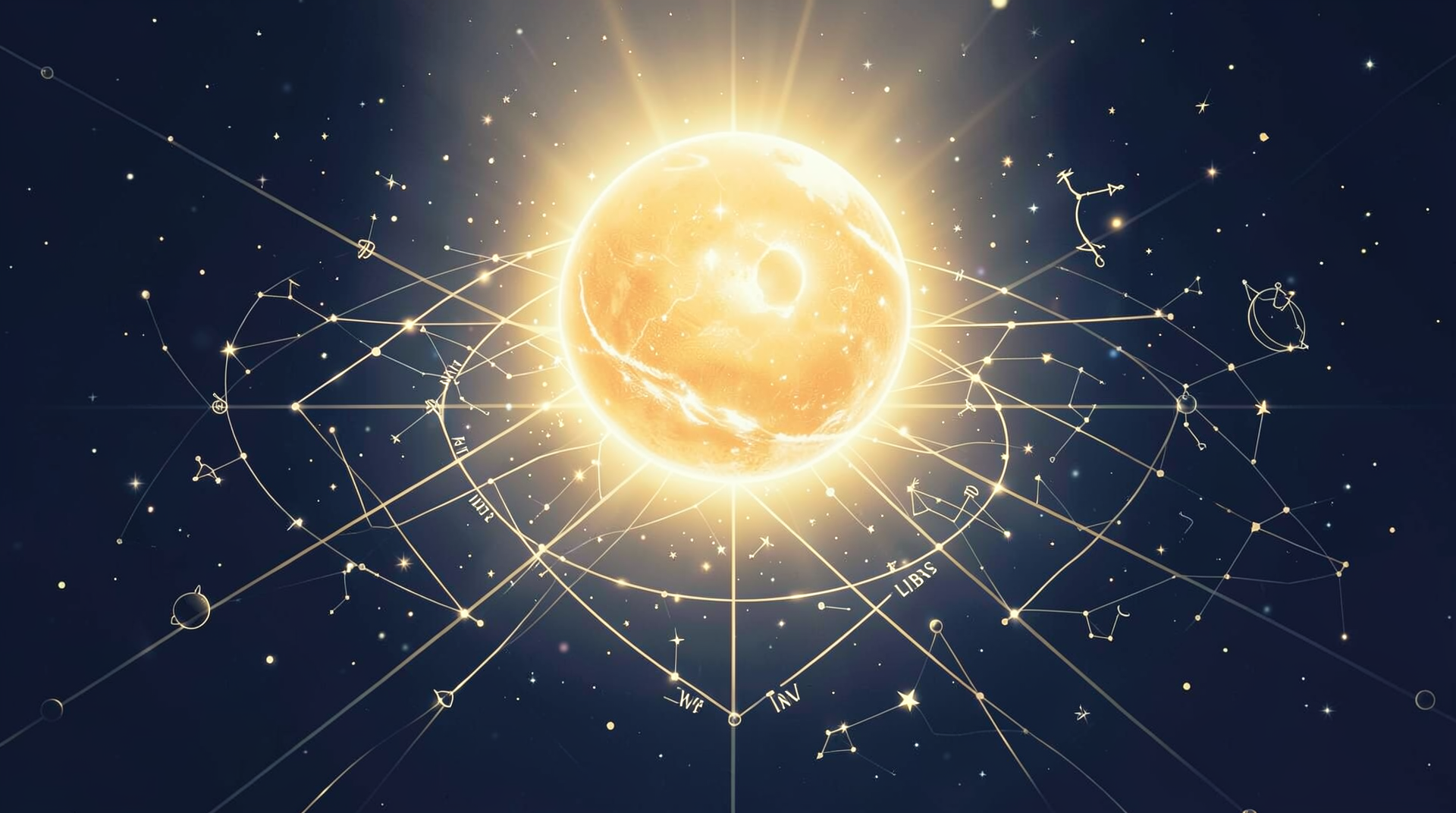
On the morning of the Spring Equinox — the precise moment the Sun crossed into the first degree of Aries, 0°00' of the zodiac wheel — OpenAI announced Genesis (GPT-6): a multi-modal model claimed to perform real-time physical reasoning and generate high-fidelity video from a single prompt. The symbolism was impossible to miss. The company didn't just release a product; it staged a debut on the astrological new year, at the exact degree that marks the rebirth of the wheel of signs.
For anyone who reads the sky, the choice of date was a form of branding as old as astrology itself. Aries is the pioneer, the initiator, the finger on the trigger. Genesis — the name of the book of beginnings — released into the first degree of the first sign is a declaration of intent: this is where the story restarts.
But the equinox chart carries complications too. Because if Aries is the seed, the seed was planted during a Mercury retrograde — and that changes the flavor of everything that grows from it.
What Genesis Claims to Be
Genesis (GPT-6) is positioned as a leap beyond conversation into world-models. Where earlier models reasoned primarily over language and text, Genesis is reportedly trained to reason over physics — cause and effect, momentum, gravity, material behavior — and to render that reasoning as photorealistic video, frame by frame, in real time.
In practical terms, OpenAI is promising an AI that doesn't just describe the world but simulates it: pour a virtual cup of water, watch it splash; tip an object, watch it fall according to mass and friction. It is, in the language of its own marketing, a machine with an intuition for the "rules of the world."
It is also, in astrological terms, pure Neptune dreaming under a Saturn contract — an extraordinary hallucination of reality made with extraordinary discipline. And those two planets were holding hands at the moment of the launch.
The Equinox Chart: Sun at 0° Aries
At 14:46 UTC on March 20, 2026, the Sun sat at exactly 0°00' Aries — the equinox point itself, the hinge between darkness and light, the moment the wheel begins to turn. A launch at the zero degree of Aries is textbook Aries energy: bold, annunciatory, unapologetically forward. It says we begin now.
But notice the emphasis of the moment: the chart, cast for OpenAI's San Francisco headquarters, was cardinal-dominant and fire-leading — Aries new beginnings, Aries initiative, Aries impatience. The Moon rode alongside at 20° Aries in a waxing crescent, adding emotional momentum and the optimism of something just beginning to take shape. The Ascendant at 11° Aries placed the whole event on a first-house axis: self-assertion, identity, the public face of "I am."
This is a chart that wants to be seen. And Genesis, on its release day, absolutely was.
Mercury Retrograde: The Fine Print of the Launch
Here is the caution the headline won't print. At the equinox, Mercury — the planet of communication, data, and machines — was retrograde in Pisces, sitting in the chart's hidden twelfth house.
Mercury retrograde at a product launch is a classic mixed signal:
- Releases can be technically impressive yet poorly communicated — announcements that must be walked back, changed, or clarified.
- Rollouts often stumble — bugs, incompatibilities, and capability gaps discovered only after launch.
- Perceptions get foggy. Under a Pisces retrograde especially, the line between what the product is and what the company hopes it to be blurs, and the marketing can outrun the reality.
None of this means Genesis fails. It means the first impression is not trustworthy as the final verdict. Retrograde launches are famously revised, re-launched, renamed, or re-framed weeks later — often exactly when Mercury turns direct. Watch the windows when Mercury stations direct in the following weeks for the "real" version of the announcement to surface.
In Gemini terms — and recall that Uranus transits Gemini throughout 2026, the sign of data, networks, and the spread of information — this retrograde whisper is the reminder that what is said at launch is only the first draft of the story.
Saturn and Neptune in Aries: The Hype-Reality Tension
The most telling presence in the equinox chart is the Saturn–Neptune conjunction in early Aries, both occupying the twelfth house.
- Saturn wants structure, evidence, limits, and accountability.
- Neptune wants dreams, vision, boundlessness, and transcendence.
Together they generate the exact cultural weather that surrounds a model like Genesis: extraordinary claims about what is possible, meeting hard questions about what is real. Neptune is the film-cutter of illusions — and physical-reasoning AI capable of photorealistic video is, almost by definition, an engine for generating plausible worlds. The Saturn half of the pair is the ethical scaffold: watermarks, provenance, guardrails, and the blunt question of who is accountable when the plausible world is a lie.
Under Saturn–Neptune, the industry and its regulators will fight a thousand small battles over exactly this: how do you build honest machines that are, by design, masters of simulation? This is the central tension of the entire Genesis era, written twice in the sky.
Chiron in Aries: The Wound at the Heart of the Machine
The equinox chart's Chiron at 25° Aries rose in the first house, the house of identity and self. Chiron is the "wounded healer" — the place of deep pain that becomes, paradoxically, a place of profound teaching.
In the first house of this release, Chiron points at a collective wound: humanity's fear of being replaced by its own creation. The most charismatic Aries-branded debut — the "god model," the machine that reasons like a body and dreams in video — is precisely the image that triggers our deepest questions about what makes us special. Chiron asks Genesis, and asks us: can intelligence exist without flesh? Can a mind reason about the world without ever having lived in it?
The answer isn't in the launch video. It's in how the next generation of humans — and the next generation of machines — learn to coexist. That is a Chiron conversation, and it will heal or wound depending on how honestly it is conducted.
Reading Against OpenAI's Own Birth Chart
OpenAI was founded on December 11, 2015, with a Sagittarius Sun — the sign of expansion, far-horizon vision, and the philosophy of "the future, made." A Sagittarius company releasing a world-simulator on the Aries equinox is thematically coherent: the archer's arrow, fired at the first degree of the ram.
Weaving the transit chart into the natal wheel:
- Transit Venus and the Moon at ~17–20° Aries landed exactly on OpenAI's natal Uranus (16° Aries) — a near-exact conjunction. Uranus is the planet of breakthrough, disruption, and sudden leaps. A launch hitting the company's own natal Uranian point is a powerful signature of revolutionary, category-breaking release: this is genuinely new, genuinely disruptive.
- Transit Pluto in Aquarius pressed onto OpenAI's first house — transformation of the company's public identity and its place in the collective technological project. Pluto in Aquarius is an era-defining transit for technology and power; Genesis is one of its clearest expressions.
- Transit Mercury (retrograde) moved over OpenAI's natal Neptune in Pisces — communication running through the natal planet of vision and imagination. Brilliant for vision-casting and inspirational messaging; hazardous for precise, factual, contractual clarity. The gap between the promise and the spec is precisely where this aspect bites.
In short: the chart reads as genuinely revolutionary and genuinely imaginative — with an asterisk. The asterisk is Mercury retrograde. Everything about the vision is exalted; everything about the verification is delayed.
The Uranian Provocation in Taurus
One more transit matters: Uranus in Taurus (the second house of the equinox chart) was actively disrupting the domain of money, value, and resources. Geneeneconomics: the release of a model that can generate endless, photorealistic video threatens entire industries that monetize exactly that — and creates, overnight, new ones. Uranus in Taurus is the astrology of value being redefined by shock, and Genesis is a shock delivered directly into the nervous system of media, film, gaming, and design.
When Uranus breaks a thing, the pieces don't just scatter — they rearrange. The industries touched by Genesis will not simply lose; they will reconfigure. The question is never whether the change happens — under an Aries equinox and a Taurus Uranus, it is already happening — but who shapes the reconfiguration with intention rather than fear.
The Downsides, the Warnings, and the Fine Print
For all the brilliance of the moment, a responsible reading of this chart demands the caveats be spoken aloud:
- Mercury retrograde period (launch and weeks after). Treat initial demos, benchmark claims, and launch-day messaging as provisional. Bugs, retractions, and clarifying statements are not signs of failure — they are the predictable texture of a retrograde-born release. Do not make career, purchase, or deployment decisions based on the first week of coverage.
- Saturn–Neptune blur. The gap between demonstrated and claimed capability is the danger zone. For creators and businesses, this is the moment to demand third-party, reproducible evidence — not promotional video.
- Chiron's wound and the labor question. The release will re-ignite raw debates about creative labor, displacement, and authenticity. Expect intense, sometimes painful public conversations. That is Chiron working — productive, but not comfortable.
- Pluto's shadow. A model of this power invites centralized and concentrated control. Questions of access, safety, and the concentration of technological power are not academic; they are the third-house realities of this Pluto-in-Aquarius era.
A Responsible Disclaimer
As with all astrology, this reading offers themes and timing, not certainty. Planetary symbolism does not predict whether Genesis will succeed commercially, exceed its benchmarks, or live up to its demonstrations. It describes a weather system — a set of energies, opportunities, and cautions — within which human choices, engineering, policy, and luck all do their own work. Use astrological insight to inform your discernment, not to replace critical thinking. Especially when a machine that reasons in physics is involved, the most valuable human skill is the ability to tell a compelling simulation from an accountable fact.
Conclusion: A Seed Planted at Zero
There was no more fitting moment in the year for a project named Genesis than the hour the Sun stood at the very first degree of Aries. OpenAI chose its day with the instinct of an astrologer: a rebirth, a beginning, an arrow loosed.
The equinox Sun says start. The waxing Moon says grow. The Uranus conjunction on the natal chart says this really is new. And yet Mercury standing still in the water sign of Pisces whispers the corrective: be careful what you promise, and be careful what you believe.
Genesis is a seed planted at degree zero. Aries seeds grow fast, and they grow impressively — but they also grow before their roots are fully formed. Whether the machine that dreams in physics becomes a foundation of the future or a luminous castle built on a retrograde's shifting sand depends less on the launch day's ceremony, and more on the long, unglamorous, Saturn-sober work of the months that follow.
The wheel has turned. The ram has charged. And for better and for worse, the story from here begins exactly where Genesis says it does: at the beginning.
Related Articles
Love in the Time of Venus Retrograde: A Day-by-Day Relationship Check-In for Oct 5–11
October 5, 2026
A day-by-day relationship check-in for October 5–11, 2026: Venus retrograde in Scorpio, the Mercury–Venus reconnect window, the Libra New Moon, and where to be careful in love this week.
Moon Signs, Day by Day: The Waning Crescent Wind-Down From Leo to the Libra New Moon (Oct 5–11)
October 5, 2026
A day-by-day moon-sign guide to Oct 5–11, 2026: the waning crescent slides from Leo through Virgo into the Libra New Moon on Oct 10, with Venus retrograde, Mercury in Scorpio, cautions, and New Moon intention rituals.
Mercury Meets Retrograde Venus at 8° Scorpio (Oct 6–7): The Reconnect Window of the Year
October 5, 2026
Mercury meets retrograde Venus at 8° Scorpio on Oct 6–7, 2026, opening the year's most powerful reconnection window. What it means for love, exes, money, and buried words — plus the cautions.
The Libra New Moon of October 10: Why This Fresh Start Comes With Saturn's Fine Print
October 5, 2026
The Libra New Moon on Oct 10, 2026 plants a fresh start at 17° Libra — but with Venus retrograde as its ruler and Saturn's opposition as its fine print, this new beginning comes with terms, time and honesty attached. Read the full chart story here.