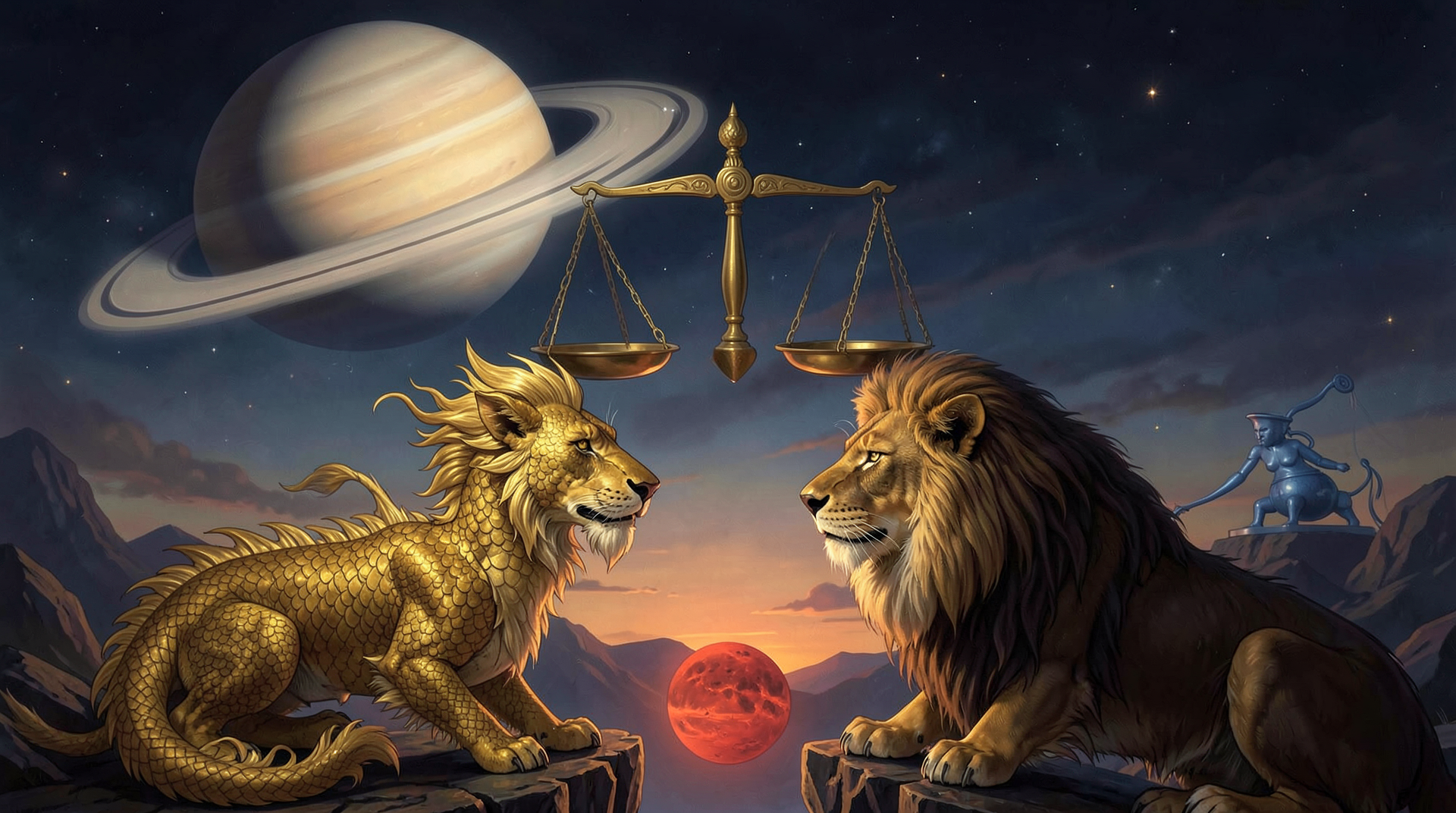
For years, the image of the China–Iran axis has been one of granite solidarity: Beijing at Tehran's shoulder, veto-ready at the UN, buying discounted crude at arm's length from the dollar, and signing grand strategic pacts to a chorus of "comprehensive strategic partnership." But the headlines of early September 2026 tell a more austere story. As Washington tightens what it has called its toughest sanctions regime in history — with secondary penalties aimed squarely at the banks, refiners, and insurance chains that enable Iranian trade — Beijing's embrace is visibly cooling.
Chinese refiners are quietly cutting loadings of Iranian crude. Payment channels through yuan-settlement banks are being re-audited. A 25-year cooperation agreement signed with great fanfare has delivered far less capital, technology, and diplomatic cover than Tehran hoped. China has not abandoned Iran — but it is demonstrating, in the exacting language of ledgers and compliance forms, that its support has limits.
In an astrology of nations, this is not a story of betrayal. It is a story of structure — of the slow, grinding alignment of planetary machinery that decides how far one power can lean on another before the beam bends. Let's read the sky over Beijing, Tehran, and Washington for the first week of September 2026.
A Virgo Sky: The Season of the Accountant
The astrological backdrop of this week is unmistakably Virgoan. The Sun at 11–12° Virgo and Mercury at 18–19° Virgo are running close together in the sign of precise bookkeeping, audits, tariffs, fine print, and the quiet arithmetic of "can we afford this?" Meanwhile, Venus in Libra (25–26°) negotiates the terms of balance, and Jupiter in Leo (14°) inflates the rhetoric of partnership — grand summits and photo-ops that promise more than the paperwork delivers.
Three planets are retrograde — Saturn retrograde in Aries (13°), Neptune retrograde in Aries (3.5°), and Pluto retrograde in Aquarius (3.5°) — with Uranus freshly stationed direct in Gemini after weeks of stalled motion. Retrogrades of the outer planets are not reversals; they are re-visitations. Reality checks. The universe asking: What did you actually build? What did you actually promise? What is actually in the vault?
That is precisely the question now hanging over the China–Iran relationship.
The Dragon's Ledger: Transits Over Beijing's Birth Chart
China's national horoscope — cast for the proclamation of the People's Republic on October 1, 1949 — is being touched in three deeply symbolic places this month.
1. Sun & Mercury Conjunct Saturn in the House of Alliances
This is the headline aspect of the whole story. Transit Sun (Virgo 11.7°) is applying to a conjunction with China's natal Saturn at 13° Virgo, and transit Mercury follows within a few degrees. Natally, China's Saturn sits in its 7th house — the house of allies, treaty partners, and visible adversaries.
When the Sun meets a nation's Saturn, the nation is asked to discipline something it has romanticized. When that conjunction lands in the 7th house, the subject is partnerships. Translated into practical reality: Beijing is being forced to re-price its relationship with Tehran — to calculate what the alliance actually costs, exposes, and returns. Saturn does not destroy friendships; it qualifies them. It turns "strategic partner" into "risk-managed counterparty." It is the aspect of memo-circles, compliance departments, and quiet revisions to loading schedules.
2. Saturn & Neptune Retrograde in the House of National Wealth
Transiting Saturn (retrograde in Aries) and Neptune (retrograde in Aries) are both moving through China's 2nd house — the sector of reserves, currency, state coffers, and economic self-preservation. Saturn here is the voice of scarcity and prudence: What can we actually afford to subsidize? Neptune here fogs the accounts: sanctioned trade routed through intermediaries, blurry ownership of shadow tankers, the grey-zone financial engineering that has kept Iranian barrels flowing.
Neptune retrograde in the 2nd house is a disclosure aspect: illusions about money are dissolved, sometimes painfully. For a state that has profited handsomely from discounted Iranian crude, the retrograde asks Beijing to show its books — to itself. The fog of the grey market that once made the arrangement comfortable is thinning.
3. Pluto on the Ascendant: The Great Rebranding
The deepest and longest-lasting signature is transit Pluto (Aquarius 3.5°) closing in on China's natal Ascendant at 1° Aquarius. Pluto crossing a national Ascendant is generational: it dismantles and rebuilds the face a nation shows the world. China's global image has leaned heavily on narratives of reliability, non-interference, and unstoppable rise. A Pluto passage does not care about narratives. It exposes contradictions — in this case, the contradiction between declaring support for Iran's sovereignty and quietly stepping back from secondary-sanction exposure that would wound Chinese banks and refiners.
Pluto on the Ascendant is why the optics of this moment feel so starkly transformational: Beijing is not merely adjusting policy; it is being asked, at the level of identity, to choose what kind of power it is in the next era of the dollar system.
Tehran Under Saturn: Pressure on the Crown
Iran's chart — cast for the proclamation of the Islamic Republic on April 1, 1979 — shows a regime under the heaviest aspect a state can face: transit Saturn, retrograde in Aries at 13°, is applying to a conjunction with Iran's natal Sun at 11° Aries, which sits in its 10th house — the house of the state, its leadership, and its legitimacy on the world stage. Saturn here is the sound of doors closing. Sanctions, asset freezes, the degradation of international standing — the archetypal Saturn-in-the-10th list.
Coincident with this, transit Neptune (Aries 3.5°) hovers over the same natal Sun, adding its narcotic haze: propaganda victories, symbolic gestures, and messaging that keeps hope alive while the material picture darkens. Neptune-to-Sun in a national chart is a dangerous opiate for leaders — it encourages them to mistake consensus for reality, and declarations for outcomes.
And in Iran's 7th house — the house of open enemies — transit Pluto (Aquarius 3.5°) is grinding its way through, an aquifer of structural pressure: the adversary (the United States, plus allied Gulf states and Israel) is not just winning battles; it is reshaping the architecture of the region so that Iran's position erodes permanently.
The astrological message to Tehran is sober: no ally, however grand, can substitute for a durable 10th-house Saturn. Saturn retrograde rewards internal consolidation, not external rescue missions.
Mars in Cancer in the 8th House: The Fight Over "Shared Resources"
The most physical signature in the September sky is Mars in Cancer (15–16°), sitting in the 8th house of the transit chart cast for Beijing — the arena of other people's money, energy flows, debts, and covert wealth. In mundane astrology, Mars in the 8th is the classic signature of an economic war fought through banks, pipelines, insurance, and shadow fleets rather than open combat.
This is exactly the texture of the current standoff: U.S. pressure operates through the architecture of global finance — cutting off the payment corridors, the reinsurance, the IT and the logistics that carry Iranian oil to Chinese ports. And Mars in Cancer, in the sign of the homeland and the family, brings something else: protectiveness with limits. China's officials will defend the "independent foreign policy" narrative to the podium's end — but Cancer's Mars defends home first. When an ally's needs begin to threaten the homeland's financial stability, the embrace cools.
For Tehran, that same Mars in Cancer squares Iran's natal Sun, and trines its natal Uranus in Scorpio — the exact prompting for military and covert flaring: missile tests, drone shows, Hormuz rhetoric. Expect aggressive signaling from Tehran to spike precisely because its diplomatic space is narrowing — Mars trine Uranus is the aspect of the sudden, provocative demonstration.
The Ceiling, in Plain Arithmetic
None of this means China will abandon Iran, and the astrology supports that nuance. Jupiter in Leo, transiting over China's natal Mars and Pluto in Leo (14–17°), keeps the grand-envisioning, big-project energy alive — Beijing will continue to sign memoranda, host delegations, and speak of the "eastward orientation" of Iran's diplomacy. There will be more frameworks, more yuan-credit lines on paper, more cultural exchanges.
But Jupiter is not Saturn. Jupiter signs the aspiration; Saturn signs the budget. And the retrograde Saturn over the 2nd house of Chinese wealth, with Sun and Mercury welding onto natal Saturn in the 7th house of alliances, is a hard, seasonal correction to over-promising.
In practical terms, readers should expect:
- Continued symbolic solidarity — diplomatic photo-ops, vetoes where affordable, statements of principle.
- Slower and smaller material flows — refiner loadings cut, payment windows tightened, compliance audits deepened at Chinese banks that fear secondary sanctions.
- Re-export and grey-market adaptation — Neptune retrograde in the 2nd house means the shadow channels will try to keep flowing, but with more friction and more leaks.
- Iranian frustration surfacing publicly — Tehran's disappointment with the 25-year deal's delivery has already leaked into commentary; Mars square the Iranian Sun will keep that irritation audible.
Where the Sky Says "Proceed With Caution"
A responsible reading of this sky should name the hazards plainly:
- Saturn retrograde periods (through mid-November 2026) are terrible windows for over-committing to new alliances or signing grand, unfunded agreements. Any "new strategic pact" announced between now and then should be weighed against the likelihood that its substance will be quietly deferred. Treat grand summits as theater, not contract.
- Neptune retrograde in Aries (around 3.5°) promotes deception, especially about oil shipments, ship locations, and payment routing. Verified information is scarce; treat claims from all sides — Beijing's reassurances, Tehran's boasts, Washington's enforcement numbers — as provisional.
- Mercury conjunct the Sun in Virgo this week amplifies scrutiny of fine print: watch for sanctions carve-outs, waivers, and technical definitions (what counts as "Iranian crude" vs. "blended feedstock") — this is where the real battle is being fought.
- Uranus, newly stationed direct at 5° Gemini, can break sudden news at any moment: abrupt policy reversals, leaked cables, surprise designations. Do not expect the situation to remain frozen for long.
The Bigger Pattern
Look past the week and a larger mundane-astrology arc emerges: Pluto in Aquarius (3.5°) is reprogramming the entire global system — currencies, alliances, digital infrastructure — while Saturn and Neptune conjoined in Aries during 2026 represent one of the most consequential "boundary-making meets dissolution" cycles of the decade. The China–Iran story is a tributary of that mainstream: the old certainties of the petrodollar-and-sanctions order are being renegotiated, and every state is discovering that its leverage has limits.
China is discovering the limit of its wallet. Iran is discovering the limit of its friends. And the United States, for now, is demonstrating the reach of its financial infrastructure — which its own transit chart, with the Sun in its 7th house of adversaries and Pluto transiting its 3rd house of communication, suggests Washington will keep pressing hard through the autumn.
A Note on Method
Astrology does not predict geopolitics; it interprets it. National charts are symbolic constructions, and mundane astrology is a lens for tracking collective mood and structural pressure — not a substitute for reporting, economics, or policy analysis. Timelines and outcomes are never guaranteed by the sky, and the human variables — leadership changes, accidents, negotiation breakthroughs, war — always exceed the horoscope. Use the transits to understand the texture of this moment, not to place bets on its ending.
Conclusion: The Kindness of Saturn
If there is one takeaway from the September sky, it is that the China–Iran partnership is entering its accounting phase — the phase where poetry meets payroll. Saturn, in both nations' charts this month, is not an enemy. It is the consul that forces governments to face what they can actually sustain. For Beijing, that means honest arithmetic about cost, exposure, and credibility. For Tehran, it means a reckoning with how much of its survival strategy rests on borrowed shoulders.
The stars were never going to tell us whether the alliance lives or dies. They tell us on what terms it will continue: quieter, more conditional, more transactional — and, for a world that has watched too many grand pronouncements dissolve, perhaps more honest. The dragon's ledger has been opened. What it reveals is a friendship with a ceiling — and a sky that has been asking both partners to measure it for a very long time.
Related Articles
Mars Closes to 11° of Jupiter in Leo: The Week 2026's Biggest Conjunction Starts Feeling Real
October 17, 2026
Mars hits 11° Leo this week, closing to within 11° of Jupiter — the moment 2026's biggest conjunction starts feeling real. What to expect, the shadow side, and how to work the build.
Mercury Is Tapping the Brakes in Scorpio: Finish Your Detective Work Before Its Late-October Retrograde
October 16, 2026
Mercury is slowing in late Scorpio before its October 22–24 retrograde station. A practical guide to finishing your detective work, sealing your contracts, and surviving the November rewind.
The October 15–18 Stand-Still: Pluto, the North Node, and the First Quarter Moon Line Up Their Stations
October 15, 2026
From October 15–18, 2026, Pluto's direct station at 3° Aquarius, the North Node's brake at the 29° Aquarius threshold, and the First Quarter Moon in Capricorn line up into a rare celestial standstill. Here's what the pause means — and how to work it.
First Quarter Moon in Capricorn (Oct 18): The Week's "Commit or Release" Moment
October 14, 2026
The First Quarter Moon in Capricorn (Oct 18, 2026, 16:10 UTC) squares the Libra Sun — a cosmic checkpoint asking you to commit or release. Plus Venus retrograde cautions, Pluto's station, and a do/don't guide for the week.